Sun-In Is Back: The Pros, Cons, and Risks of This Viral Hair Lightener
1. Sun-In Content
If you grew up in the 90s, Sun-In probably smells like summer memories. I remember spraying it on my hair before sitting in the sun, convinced I’d turn into a beachy blonde by lunch. Now it’s trending again on social media, and people are curious all over again.
So what is it really? Is it safe? How fast does it work? And should you even try it? Let’s talk about it like friends in the bathroom mirror before a risky hair decision.
2. What Is Sun-In Hair Lightener?
Sun-In is a spray that slowly lightens your hair over time. You don’t mix it like dye or paint it on like bleach. You just spray and go.
The change is soft at first. You’ll see a small difference after one use. Keep using it and the color builds up. Think of it like turning the brightness up on a photo, one click at a time.
3. Does Sun-In Contain Bleach?
Sun-In does not use powdered bleach, but it does contain hydrogen peroxide. That’s the same ingredient found in many blonde hair dyes.
It also has lemon juice and chamomile. Lemon juice works like a gentle bleach from nature. Chamomile brightens and brings out warm highlights. Together, they slowly lift your natural color.
It’s lighter than salon bleach, but it still changes your hair from the inside.
4. Is Sun-In Permanent?
Yes, the results are permanent. Once your hair lightens, it stays that way until it grows out.
Heat makes the change stronger. Blow dryers, straighteners, and even the sun speed things up. More heat means more lift. It’s like cooking—low heat is slow, high heat is fast.
5. How Long Should I Leave Sun-In in My Hair?
You don’t rinse it out. You spray it in and let it live in your hair.
Use a little for soft highlights. Use more over time for brighter color. I learned this the hard way by spraying too much in one day and ending up orange in middle school. Slow is always safer.
6. Can I Use Sun-In Without the Sun?
Yes, and honestly, that’s better. Heat activates Sun-In, not UV rays.
You can use:
- A blow dryer
- A curling iron
- A straightener
The sun works too, but home heat gives you control. You can build color little by little without baking your scalp outside.
7. Can I Use Sun-In on Brown Hair?
You can, but the result may surprise you. Brown hair doesn’t turn blonde with Sun-In. It often turns warm, orange, or amber.
That can be cute if you want a playful summer shade. But if your dream is icy blonde, this is not the product for you.
Once it changes, it’s permanent. So be very sure before you spray.
8. Does Sun-In Damage Your Hair?
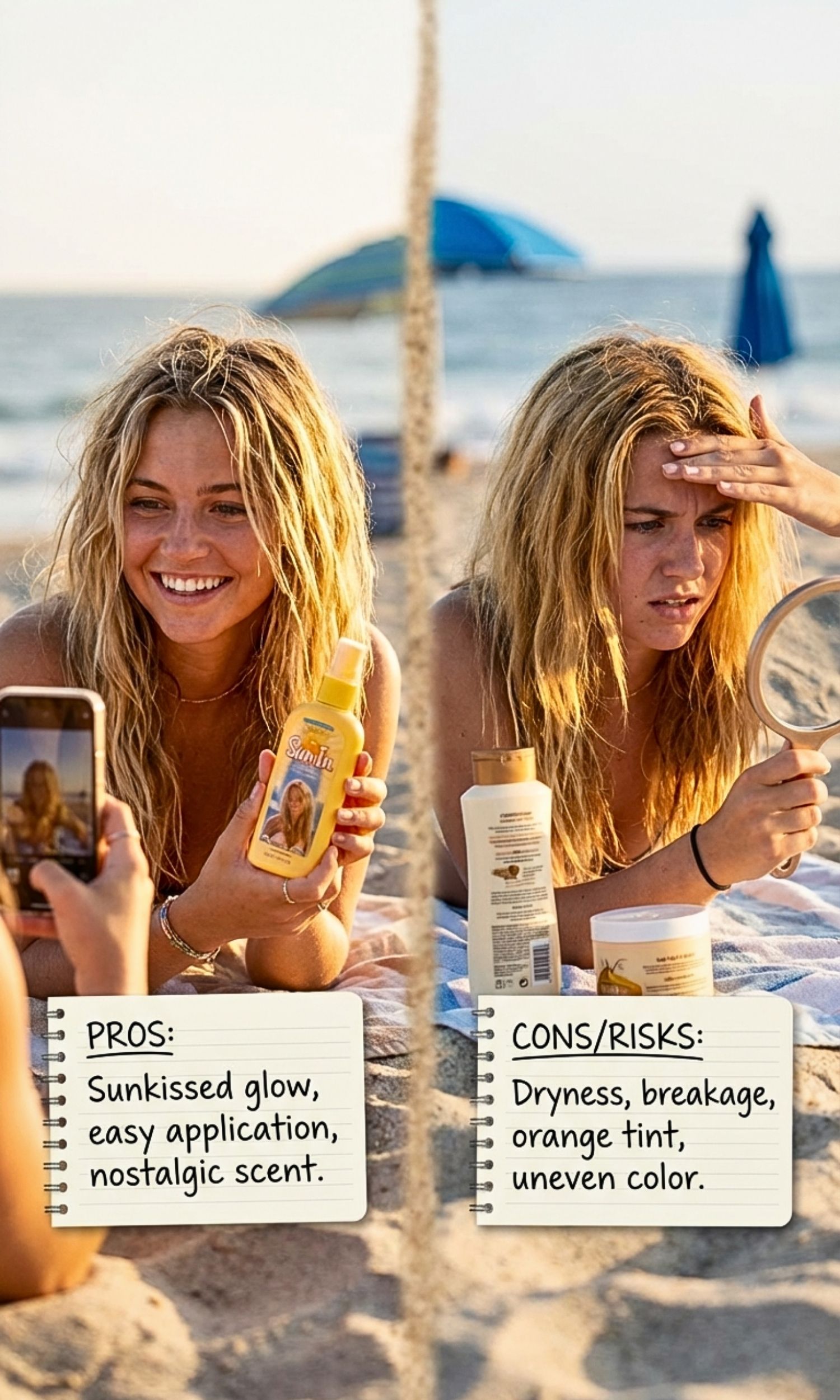
Yes, it can. Hydrogen peroxide breaks down melanin. That’s how hair gets lighter. But melanin also helps hold moisture.
Lemon juice adds dryness too. Over time, hair can feel rough and weak. Think of your hair like a sponge. The more you squeeze it, the drier it gets.
The good news is you can protect it with care.
9. How to Keep Your Hair Healthy When Using Sun-In
Don’t use it every day. Once or twice a week is enough. Slow lightening keeps hair stronger.
Moisture is your best friend. Use conditioner and hair masks often. They refill what Sun-In takes away.
Helpful habits:
- Deep condition weekly
- Use leave-in conditioner
- Avoid too much heat
- Trim split ends
Your hair will still shine, just lighter.
10. Step-by-Step: How to Safely Use Sun-In
Before you start, check your hair. If it feels dry or damaged, wait. Treat it first with masks and oils for a week or two. Healthy hair reacts better.
Brush your hair well. Tangles can cause patchy color. Even spray means even results.
You can use Sun-In on dry or damp hair. Damp hair plus a blow dryer works faster.