Hair Oils Compared: Which One Is Right for Your Hair Type?
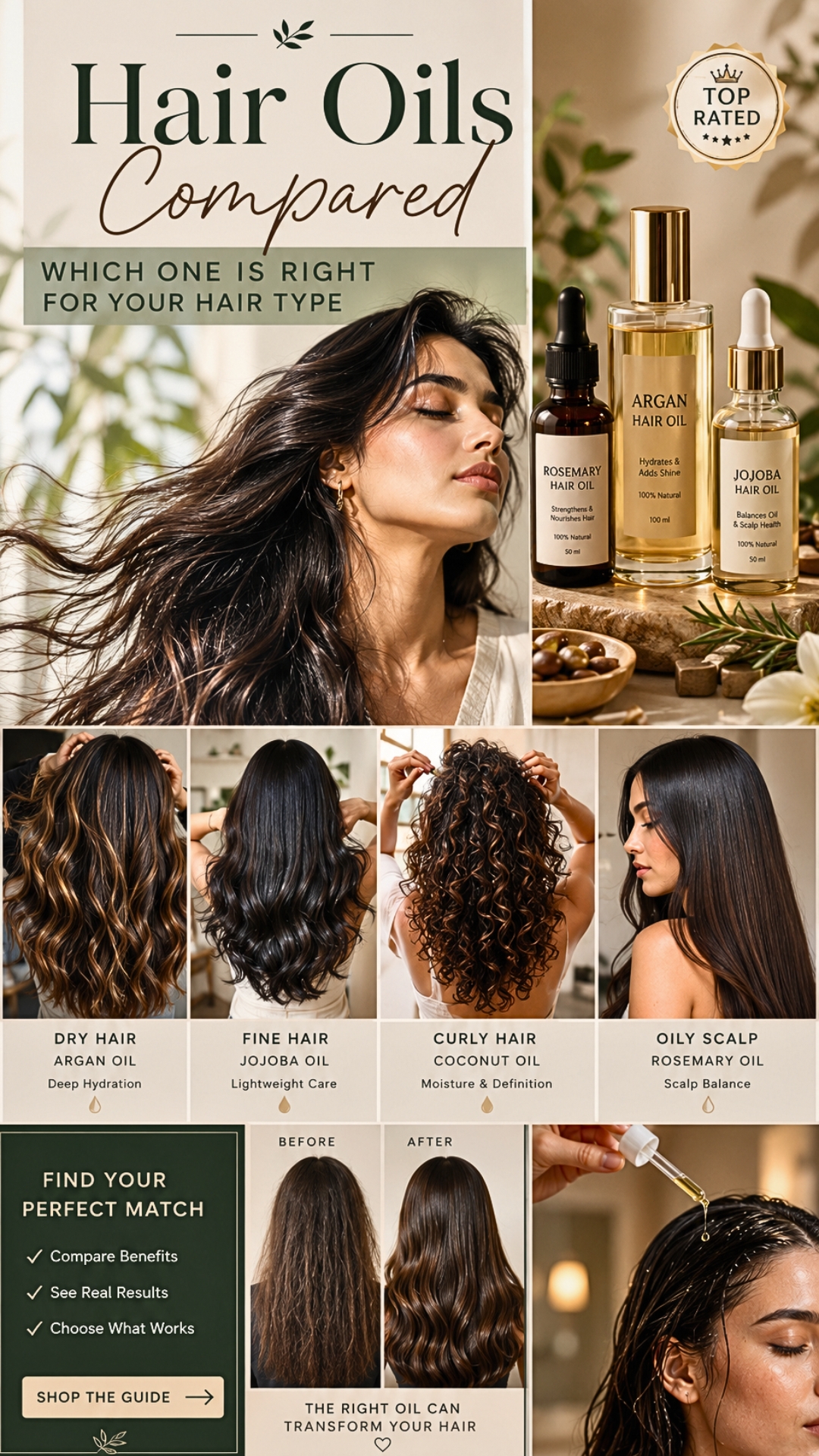
Choosing the right Hair Oils can completely change how your hair looks and feels. The right oil can reduce frizz, add shine, protect against dryness, and make your hair easier to manage. The wrong one, however, may leave your hair greasy, heavy, or weighed down.
With so many options available—coconut, argan, jojoba, castor, rosemary, and more—it can be hard to know where to start. This guide compares the most popular hair oils, explains which hair types they work best for, and shares simple tips to help you build a healthier hair care routine. Whether your hair is curly, fine, thick, dry, or color-treated, you’ll find an oil that fits your needs.
Why Hair Oils Matter
Healthy hair needs moisture and protection. Daily washing, heat styling, coloring, sun exposure, and pollution can all strip natural oils from your hair. This often leads to dryness, split ends, and breakage.
The right Hair Oils help by:
- Locking in moisture
- Reducing frizz
- Adding softness and shine
- Protecting hair from damage
- Improving manageability
- Nourishing the scalp
- Supporting healthier-looking hair over time
Keep in mind that hair oils cannot permanently repair damaged strands. They improve the appearance and condition of your hair while helping prevent future damage when used consistently.
Understanding Your Hair Type First
Before buying any oil, take a close look at your hair.
Fine Hair
Fine hair becomes oily quickly and can easily look flat. Lightweight oils work best because they won’t weigh your hair down.
Thick Hair
Thick hair usually needs richer oils that deeply moisturize and help control frizz.
Curly Hair
Curly hair naturally loses moisture faster because natural scalp oils travel slowly through curls. Rich, nourishing oils help keep curls soft and defined.
Dry or Damaged Hair
Hair that has been bleached, colored, or heat styled often needs oils that seal moisture and smooth rough cuticles.
Oily Hair
Even oily hair benefits from oil. The key is using lightweight formulas and applying them mostly to the ends instead of the scalp.
Hair Oils Compared at a Glance
| Hair Oil | Best For | Texture | Main Benefits |
|---|---|---|---|
| Coconut Oil | Thick, dry hair | Medium | Deep moisture and reduced protein loss |
| Argan Oil | Most hair types | Light | Shine, softness, frizz control |
| Jojoba Oil | Oily scalp | Very light | Balances scalp and hydrates |
| Castor Oil | Dry scalp and edges | Thick | Moisturizes and protects |
| Rosemary Oil (Diluted) | Scalp care | Light | Supports a healthy scalp routine |
| Avocado Oil | Damaged hair | Rich | Deep nourishment and softness |
| Grapeseed Oil | Fine hair | Very light | Lightweight shine without buildup |
| Sweet Almond Oil | Normal hair | Light | Smoothness and softness |
Coconut Oil: Best for Thick and Dry Hair
Coconut oil has been a favorite in hair care for generations. It penetrates the hair shaft better than many other oils, helping reduce protein loss during washing.
It works especially well for:
- Thick hair
- Coarse hair
- Dry ends
- Curly hair
If your hair is very fine, use only a small amount because coconut oil can feel heavy.
How to Use It
Apply a small amount to dry hair before shampooing. Leave it on for 30 minutes or overnight before washing.
Argan Oil: The Everyday Favorite
Argan oil is often called “liquid gold” because it makes hair feel silky without feeling greasy.
It is ideal for:
- Frizzy hair
- Color-treated hair
- Heat-styled hair
- Normal hair
Many leave-in serums contain argan oil because it smooths flyaways while adding shine.
Why People Love It
- Lightweight
- Fast absorbing
- Helps reduce frizz
- Leaves hair soft without buildup
If you’re buying your first hair oil, argan oil is one of the easiest options to start with.
Jojoba Oil: Perfect for Oily Scalps
Jojoba oil closely resembles the natural oil your scalp produces. Because of this, many people find it feels comfortable rather than greasy.
It works well for:
- Oily scalp
- Fine hair
- Sensitive scalp
- Daily use
Use only a few drops on your scalp or hair ends.
Castor Oil: Rich and Protective
Castor oil has a very thick texture. Many people use it on dry edges, brows, or lashes, although scientific evidence for faster hair growth remains limited.
Its main benefits include:
- Sealing in moisture
- Softening dry hair
- Protecting fragile ends
- Reducing dryness
Since it is so thick, many people mix it with lighter oils like jojoba or argan.
Rosemary Oil: A Popular Choice for Scalp Care
Rosemary essential oil has become increasingly popular in healthy hair routines. It must always be diluted with a carrier oil before touching the scalp.
People often use rosemary oil to:
- Massage the scalp
- Refresh the roots
- Support a healthy scalp environment
Always perform a patch test before using essential oils.
Avocado Oil: Deep Nourishment for Damaged Hair
If your hair feels rough after coloring or frequent heat styling, avocado oil can be a helpful addition.
Its rich texture helps:
- Smooth dry strands
- Improve softness
- Reduce roughness
- Add healthy-looking shine
It works best as a weekly treatment instead of an everyday styling oil.
Grapeseed Oil: Lightweight Yet Effective
People with fine hair often avoid oils because they fear greasy roots. Grapeseed oil solves that problem.
It offers:
- Light hydration
- Natural shine
- Less buildup
- Smooth flyaways
Just two or three drops are usually enough.
Sweet Almond Oil: A Great All-Round Choice
Sweet almond oil is balanced, lightweight, and beginner-friendly.
It suits:
- Normal hair
- Slightly dry hair
- Wavy hair
- Soft everyday styling
Its smooth texture makes it easy to spread evenly through the hair.
Which Hair Oil Matches Your Hair Goals?
If You Want Less Frizz
Choose:
- Argan oil
- Coconut oil
- Avocado oil
These oils coat the hair, making it smoother and easier to style.
If Your Hair Feels Dry
Try:
- Coconut oil
- Avocado oil
- Sweet almond oil
Use them as weekly deep-conditioning treatments.
If You Have Fine Hair
Look for:
- Grapeseed oil
- Jojoba oil
- Lightweight argan oil
Avoid applying large amounts near the roots.
If You Style Your Hair Often
Heat styling removes moisture over time.
A few drops of argan oil on the mid-lengths and ends can help hair look smoother and shinier after styling.
How to Apply Hair Oil the Right Way
Using too much oil is one of the biggest mistakes people make.
Follow these simple steps:
Step 1: Choose the Right Amount
- Short hair: 1–2 drops
- Medium hair: 2–4 drops
- Long hair: 4–6 drops
Start small. You can always add more.
Step 2: Warm It Between Your Hands
Rub the oil between your palms before applying.
Step 3: Focus on the Ends
The ends are usually the driest part of your hair.
Step 4: Avoid Overloading the Roots
Unless you’re doing a scalp treatment, keep most of the oil away from your scalp.
Step 5: Style as Usual
Brush gently to spread the oil evenly.
Product Recommendations Worth Trying
If you’re building a hair care routine, these products are popular choices:
- Pure argan oil for daily shine
- Virgin coconut oil for weekly deep treatments
- Jojoba oil for oily scalps
- Rosemary oil blended with a carrier oil for scalp massage
- Lightweight hair serum with natural oils for frizz control
When shopping, look for products with simple ingredient lists and minimal added fragrance if you have sensitive skin.
Soft Shopping Tips
- Check the recommended styling tools for smoother blowouts.
- Shop the look with a lightweight leave-in oil.
- Recreate this hairstyle at home using a nourishing finishing oil.
- See the best tools for this look before heat styling.
- Try this product for easier styling and softer hair.
Common Hair Oil Mistakes to Avoid
Even great oils won’t give the best results if used incorrectly.
Avoid these common mistakes:
- Using far too much product
- Applying heavy oils to fine hair every day
- Expecting overnight miracle results
- Skipping shampoo after heavy oil treatments
- Applying essential oils directly without dilution
- Ignoring your scalp’s needs
- Using expired oils
Consistency works better than using large amounts once in a while.
Simple Weekly Hair Oil Routine
You don’t need a complicated routine to enjoy healthier-looking hair.
Once a Week
Apply coconut or avocado oil before washing for a deep treatment.
Two or Three Times Weekly
Massage diluted rosemary oil into your scalp if you enjoy scalp treatments.
Every Styling Day
Use a few drops of argan or grapeseed oil on the ends to reduce frizz and add shine.
Every Wash Day
Adjust the amount depending on how your hair feels. Dry winter hair may need more moisture than humid summer hair.
Signs You’ve Found the Right Hair Oil
The best oil should make your hair feel healthier without making it greasy.
Good signs include:
- Softer texture
- Better shine
- Less frizz
- Easier brushing
- More manageable styling
- Smooth-looking ends
- Hair that feels light instead of sticky
If your hair feels heavy or oily after every use, switch to a lighter formula or reduce the amount.
Choosing Quality Hair Oils
Not every bottle on the shelf offers the same quality.
When comparing products, consider:
- Cold-pressed or minimally processed oils
- Clear ingredient lists
- Packaging that protects the oil from light
- Products without unnecessary fillers if you want pure oils
- Trusted brands with consistent customer reviews
A higher price doesn’t always mean better quality. Focus on ingredients and how the product performs with your specific hair type.
Final Thoughts
Choosing the right Hair Oils doesn’t have to be confusing. The best option depends on your hair type, styling habits, and personal goals. Fine hair usually benefits from lightweight oils like grapeseed or jojoba, while thick or dry hair often responds well to coconut or avocado oil. Argan oil remains one of the most versatile choices for everyday softness and shine.
Start with one oil that matches your hair’s needs, use it consistently, and pay attention to how your hair responds over a few weeks. Small changes often lead to noticeable improvements in softness, manageability, and overall appearance.
If you’re ready to upgrade your routine, check the recommended styling tools, shop the look with a quality hair oil, or try a beginner-friendly product that fits your hair type. A simple, well-chosen oil can make everyday styling easier while helping your hair look healthier and more polished over time.