Before And After Switching To Sulfate Free Shampoo: What Really Changes for Your Hair
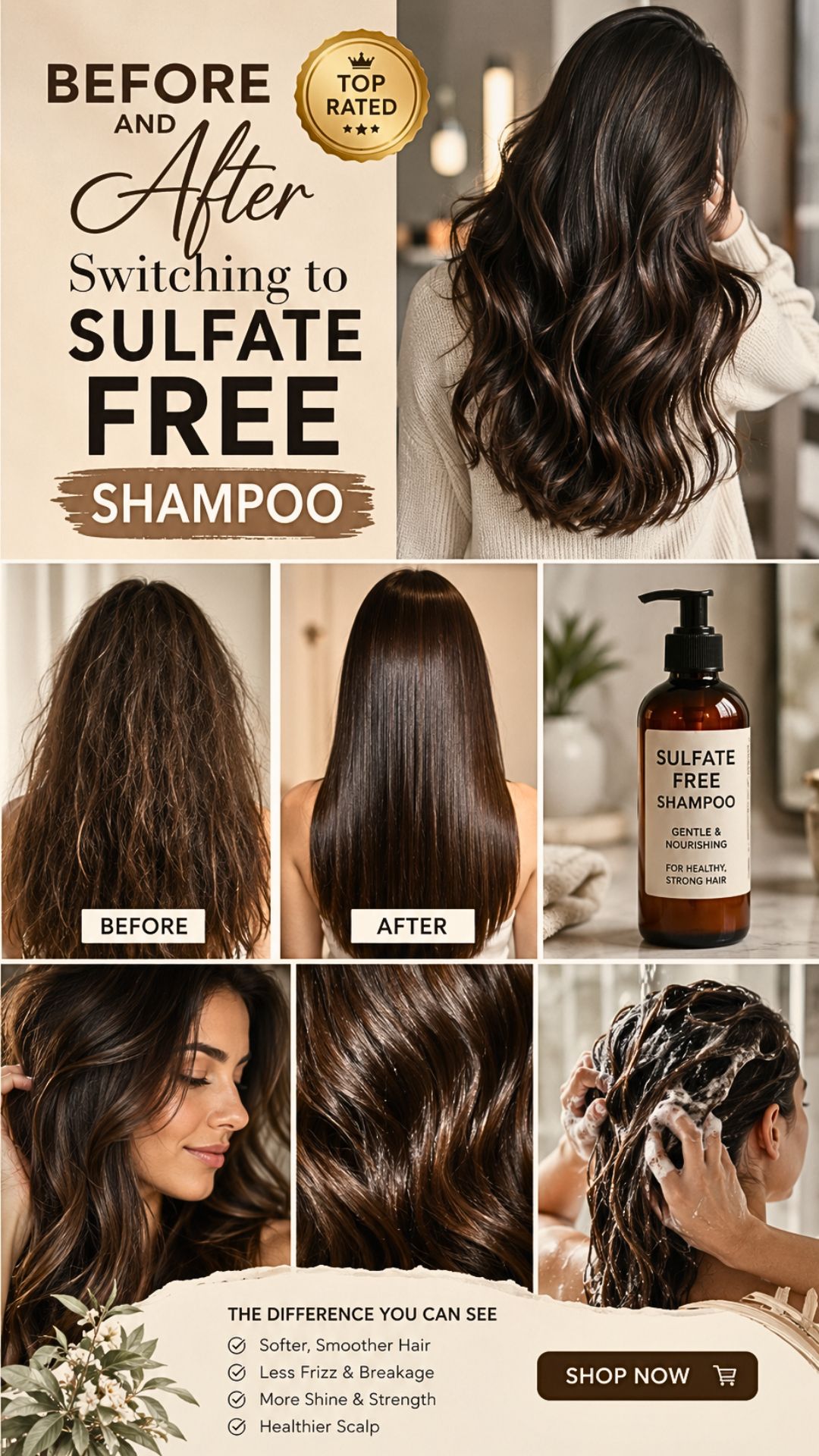
If you’ve been wondering whether switching shampoos can truly improve your hair, you’re not alone. Many people search for Before And After Switching To Sulfate Free Shampoo because they want softer, healthier, and less frizzy hair without using harsh products.
The truth is that sulfate-free shampoo is not a miracle overnight fix. However, many people notice positive changes after a few weeks of consistent use. Hair often feels less dry, the scalp becomes more comfortable, and color-treated hair can stay vibrant for longer. If your current shampoo leaves your hair feeling stripped or tangled, making the switch may be worth considering.
In this guide, you’ll learn what really happens before and after switching to sulfate-free shampoo, what results you can realistically expect, how to choose the right product, and how to build a simple hair care routine that supports healthier hair.
What Is Sulfate Free Shampoo?
Sulfate-free shampoo cleans your hair without using strong cleansing agents called sulfates. Common sulfates include Sodium Lauryl Sulfate (SLS) and Sodium Laureth Sulfate (SLES).
These ingredients create the rich foam many people associate with clean hair. While they remove dirt and oil very well, they can also wash away natural oils that keep your hair soft and your scalp balanced.
Sulfate-free formulas use gentler cleansers that clean effectively while helping your hair keep more of its natural moisture.
Why So Many People Are Making the Switch
Hair care has changed a lot in recent years. Instead of focusing only on clean hair, many people now want healthy hair that stays hydrated and shiny.
People often switch because they have:
- Dry or damaged hair
- Curly or textured hair
- Color-treated hair
- Sensitive scalp
- Frizzy hair
- Chemically treated hair
- Hair that feels rough after washing
A gentler shampoo can help support these hair types without removing too much moisture.
Before And After Switching To Sulfate Free Shampoo: What You May Notice
The biggest changes usually happen gradually. Here’s what many people experience.
| Before Switching | After Switching |
|---|---|
| Hair feels dry after washing | Hair feels softer and smoother |
| Scalp feels tight or itchy | Scalp feels calmer and more comfortable |
| Hair color fades quickly | Color often lasts longer |
| Hair becomes frizzy in humidity | Frizz may become easier to manage |
| Ends look dull | Hair appears shinier |
| Hair tangles easily | Hair becomes easier to comb |
| Curly hair loses definition | Natural curls look more defined |
| Hair feels stripped after every wash | Hair keeps more natural moisture |
Remember that everyone’s hair is different. Your results depend on your hair type, washing routine, styling habits, and overall hair health.
The First Week After Switching
Many people expect instant results. Instead, the first week can feel different.
Your shampoo may produce less foam than you’re used to. This doesn’t mean it isn’t cleaning your hair.
Some people also notice that their hair feels heavier for the first few washes. That’s often because the scalp is adjusting after years of stronger cleansing.
Tips for the first week:
- Massage your scalp for at least one minute.
- Wash twice if your hair has heavy product buildup.
- Rinse thoroughly.
- Use a lightweight conditioner.
Give your hair time to adjust before deciding whether the shampoo works for you.
What Changes After One Month?
After several weeks, many people begin seeing the benefits more clearly.
Softer Hair
Hair often becomes less brittle because it keeps more of its natural moisture.
Better Shine
Healthy hair reflects light more evenly, making it appear shinier.
Reduced Frizz
Moisturized hair usually has fewer flyaways and feels smoother.
Healthier Scalp
A gentle cleanser may help reduce dryness for people whose scalp reacts to stronger shampoos.
Easier Styling
Hair that stays hydrated often responds better to blow drying, curling, or air drying.
Is Sulfate Free Shampoo Right for Every Hair Type?
The answer depends on your hair needs.
Straight Hair
Straight hair can benefit from gentle cleansing, especially if the ends become dry.
Curly Hair
Curly hair naturally loses moisture more easily. Sulfate-free shampoo often helps curls stay soft and defined.
Thick Hair
Thick hair may require extra scalp massage while washing, but many thick-haired users appreciate the added moisture.
Fine Hair
Choose lightweight sulfate-free formulas that won’t weigh hair down.
Color-Treated Hair
One of the biggest advantages is helping hair color stay fresh for longer by reducing unnecessary fading.
Common Ingredients That Work Well with Sulfate Free Shampoo
Many formulas include nourishing ingredients that support healthier hair.
Look for ingredients like:
- Argan oil
- Coconut oil
- Aloe vera
- Shea butter
- Glycerin
- Rice protein
- Keratin
- Jojoba oil
- Green tea extract
- Panthenol (Vitamin B5)
These ingredients help improve softness, moisture, and manageability.
How to Choose the Best Sulfate Free Shampoo
Not every sulfate-free shampoo is the same.
Think about your biggest hair concern first.
For Dry Hair
Choose products with nourishing oils and moisturizing ingredients.
For Oily Hair
Look for lightweight cleansing formulas that remove excess oil without drying your scalp.
For Curly Hair
Hydrating formulas with extra moisture work best.
For Fine Hair
Volumizing sulfate-free shampoos help prevent flat-looking hair.
For Damaged Hair
Look for strengthening ingredients like proteins and amino acids.
Recommended Products Worth Considering
There are many excellent sulfate-free shampoos available today. These are popular choices for different hair needs.
Moisturizing Shampoo
Great for dry or damaged hair.
Helps restore softness while reducing frizz.
Color Protection Shampoo
Ideal for dyed hair.
Supports longer-lasting color and gentle cleansing.
Curl-Friendly Shampoo
Perfect for curly or wavy hair.
Helps curls stay hydrated and more defined.
Lightweight Daily Shampoo
Suitable for fine hair.
Cleans without making hair feel heavy.
If you’re building a healthier hair routine, check the recommended styling tools and pair your shampoo with a moisturizing conditioner for even better results.
Simple Hair Care Routine After Switching
Changing your shampoo works best when combined with a few healthy habits.
Step 1: Brush Before Washing
Brushing removes loose hairs and helps reduce tangles.
Step 2: Wet Hair Completely
Use warm water to fully soak your hair before applying shampoo.
Step 3: Focus on the Scalp
Massage gently with your fingertips.
Avoid scrubbing aggressively.
Step 4: Rinse Well
Take your time removing all shampoo.
Leftover product can make hair feel heavy.
Step 5: Apply Conditioner
Focus on the middle and ends rather than the scalp.
Step 6: Dry Gently
Use a microfiber towel or soft cotton T-shirt instead of rubbing with a rough towel.
Step 7: Protect During Styling
Always use a heat protectant before blow drying or using hot tools.
Small Habits That Make a Big Difference
Healthy hair isn’t just about shampoo.
Try these simple habits:
- Wash only when your hair needs it.
- Avoid very hot water.
- Trim split ends regularly.
- Use a silk pillowcase.
- Limit heat styling.
- Deep condition once each week.
- Protect hair from excessive sun exposure.
- Eat a balanced diet with enough protein.
Small improvements add up over time.
Common Mistakes to Avoid
Many people give up on sulfate-free shampoo too quickly.
Avoid these mistakes:
- Expecting instant results
- Using too much shampoo
- Not massaging the scalp long enough
- Skipping conditioner
- Washing with very hot water
- Using heavy styling products every day
- Switching shampoos every week
- Ignoring product buildup
Consistency is often more important than changing products frequently.
Signs Your Hair Is Responding Well
As your routine settles, you may notice:
- Less breakage during brushing
- Softer texture
- Improved shine
- Easier detangling
- More manageable curls
- Reduced frizz
- Better moisture balance
- Comfortable scalp
These improvements usually happen gradually rather than all at once.
When Sulfate Free Shampoo May Not Feel Right
Although many people enjoy the benefits, sulfate-free shampoo isn’t perfect for every situation.
If you regularly use heavy styling creams, oils, dry shampoo, or silicone-rich products, you may occasionally need a clarifying shampoo to remove buildup.
People with very oily scalps may also prefer alternating between a gentle sulfate-free shampoo and a clarifying shampoo every few weeks, depending on their hair needs.
Finding the right balance is more important than following one routine forever.
Helpful Tips for Better Results
If you’re making the switch, these simple tips can help you get the most from your new routine:
- Give the shampoo at least three to four weeks before judging the results.
- Choose a formula designed for your hair type rather than picking one at random.
- Pair it with a matching conditioner if possible.
- Avoid using too many styling products that can create buildup.
- Wash your scalp thoroughly instead of focusing only on the hair lengths.
- Use a wide-tooth comb on wet hair to reduce breakage.
- Be patient as your scalp adjusts to a gentler cleansing routine.
These habits often make a noticeable difference over time.
Should You Switch?
If your hair often feels dry, rough, frizzy, or your scalp becomes uncomfortable after washing, switching to a sulfate-free shampoo is worth trying.
The change won’t happen overnight, but many people notice softer hair, improved moisture, and easier styling after several weeks of regular use. Those with color-treated, curly, or damaged hair often appreciate the gentler cleansing and reduced dryness.
The key is choosing a formula that matches your hair type and sticking with it long enough to see realistic results.
Final Thoughts
Looking at the real Before And After Switching To Sulfate Free Shampoo experience, the biggest improvement isn’t dramatic transformation—it’s healthier, more balanced hair over time. Gentle cleansing helps preserve natural moisture, making hair feel softer, smoother, and easier to manage while supporting a more comfortable scalp.
If you’re ready to refresh your hair care routine, shop the look by choosing a sulfate-free shampoo that suits your hair type, and see the best tools for this look by pairing it with a nourishing conditioner, a microfiber towel, and a wide-tooth comb. These simple additions can help you recreate this hairstyle at home with healthier-looking, more manageable hair every day.