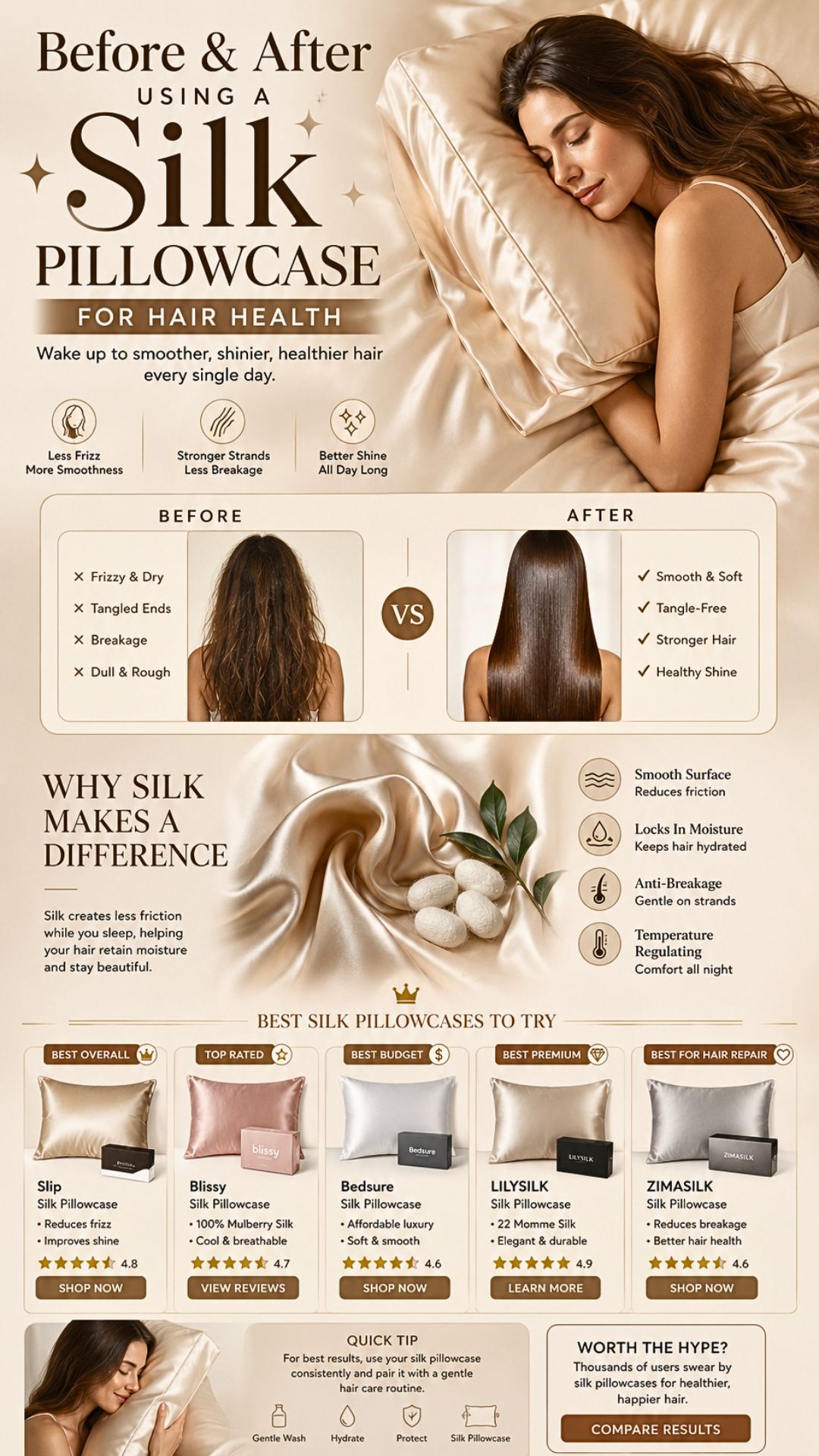
Before And After Using A Silk Pillowcase For Hair Health
Is Switching to A Silk Pillowcase Really Worth It?
If you wake up with tangled hair, frizz, or flattened curls every morning, your pillowcase could be part of the problem. Many people spend money on shampoos, conditioners, and styling products but forget that their hair rubs against a pillow for several hours every night.
Using a silk pillowcase is a simple change that may help reduce friction while you sleep. It will not magically repair damaged hair overnight, but it can help protect your strands from unnecessary stress. Over time, many people notice smoother hair, fewer tangles, and hairstyles that last longer between washes.
In this guide, you’ll learn what changes you can realistically expect before and after switching to silk, how to choose the right pillowcase, and how to get the best results as part of a healthy hair care routine.
Why Your Pillowcase Matters More Than You Think
Your hair spends six to nine hours rubbing against your pillow every night. Traditional cotton pillowcases have a rougher surface that creates friction as you move in your sleep.
That friction can lead to:
- Morning frizz
- Hair tangles
- Split ends
- Broken strands
- Flattened hairstyles
- Dry-looking hair
Silk has a much smoother surface. Instead of grabbing onto your hair, it allows strands to glide more easily across the fabric.
This doesn’t replace good hair care, but it helps reduce one source of daily damage that many people overlook.
Before Switching to Silk: Common Hair Problems
If you’re wondering whether silk is worth trying, think about your current morning routine.
Many people experience one or more of these issues.
Constant Morning Frizz
Your hair looks smooth before bed but becomes puffy and messy overnight.
Tangles That Take Forever to Brush
Long hair especially can become knotted after hours of tossing and turning.
Hair Breakage
You may notice short broken hairs around your face or on your pillow.
Curls Lose Their Shape
Natural curls and waves often become flattened after sleeping on cotton.
Dry Ends
Hair ends already receive less natural oil than the roots. Extra friction can make them feel even rougher.
After Switching: What Changes Can You Expect?
Everyone’s hair is different, but many people notice gradual improvements after a few weeks.
| Before Using Silk | After Using Silk |
|---|---|
| Hair feels rough in the morning | Hair feels smoother |
| More tangles | Fewer knots |
| Increased frizz | Better frizz control |
| Hairstyles flatten quickly | Styles last longer |
| More broken hairs | Less friction-related breakage |
| Dry-looking ends | Hair appears shinier |
Remember that silk helps protect healthy hair. It won’t repair severe damage that already exists.
How Silk Helps Protect Hair
Less Friction
This is the biggest benefit.
Instead of rough fibers pulling at your strands, silk lets hair slide gently while you sleep.
Less rubbing means less stress on each strand.
Better Moisture Retention
Cotton tends to absorb moisture.
Silk absorbs less, which may help your hair retain some of its natural oils and any leave-in products you apply before bed.
This can leave hair feeling softer the next morning.
Reduced Hair Breakage
Every small tug adds up over time.
Reducing nightly friction may help lower breakage, especially if your hair is:
- Color treated
- Bleached
- Fine
- Curly
- Long
- Chemically processed
Helps Hairstyles Last Longer
Whether you’ve spent time creating curls, a blowout, or a sleek style, silk may help preserve your hairstyle overnight.
Many people find they spend less time restyling in the morning.
Who Benefits Most From A Silk Pillowcase?
Almost every hair type can benefit, but some people notice a bigger difference.
Curly Hair
Curly hair naturally dries out more easily.
Silk helps reduce frizz while keeping curls more defined.
Fine Hair
Fine hair breaks more easily.
Less friction means fewer snapped strands.
Long Hair
Long hair tangles easily during sleep.
Silk helps reduce knots, making brushing gentler.
Color-Treated Hair
Hair that has been dyed or bleached often needs extra protection.
A smoother sleeping surface may help reduce additional stress.
Thick Hair
Even thick hair can become frizzy and difficult to manage after sleeping.
Silk often helps maintain smoother strands.
Silk vs Cotton: Which Is Better?
Here’s a simple comparison.
| Feature | Silk | Cotton |
|---|---|---|
| Surface | Smooth | Textured |
| Friction | Low | Higher |
| Hair tangles | Fewer | More common |
| Frizz | Often reduced | May increase |
| Hairstyle longevity | Better | Shorter |
| Moisture absorption | Lower | Higher |
| Gentle on delicate hair | Yes | Less so |
Cotton is perfectly fine for everyday use, but if hair health is your priority, silk offers several advantages.
Silk vs Satin: What’s the Difference?
Many people confuse silk and satin.
Silk is a natural fiber produced by silkworms.
Satin is a type of weave. It can be made from silk, polyester, nylon, or other materials.
Silk
Pros
- Natural fiber
- Breathable
- Soft
- Luxurious feel
Cons
- Usually more expensive
- Requires gentle care
Satin
Pros
- Budget friendly
- Smooth surface
- Easy to find
Cons
- Quality varies
- Many are made from synthetic fibers
If your budget allows, real silk is often preferred. However, a quality satin pillowcase can still reduce friction compared to cotton.
How Long Does It Take to See Results?
Results depend on your hair type and current condition.
Here’s a realistic timeline.
First Night
- Hair may feel smoother
- Fewer tangles in the morning
One Week
- Easier brushing
- Less overnight frizz
- Styles stay neater
One Month
- Less noticeable breakage
- Hair feels softer
- Better overall appearance
Keep your expectations realistic.
Silk supports healthier hair habits rather than creating instant transformations.
How to Use A Silk Pillowcase for the Best Results
Adding silk to your routine is easy.
Step 1: Start With Clean Hair
Sleeping with clean or lightly refreshed hair helps reduce oil and product buildup on the pillowcase.
Step 2: Apply a Lightweight Leave-In Conditioner
If your hair needs moisture, apply a small amount before bed.
Silk helps reduce friction, while the leave-in conditioner supports hydration.
Step 3: Choose a Protective Hairstyle
Loose styles work well.
Try:
- Loose braid
- Low ponytail
- Pineapple hairstyle for curls
- Soft bun secured with a silk scrunchie
Avoid tight hairstyles that pull on the scalp.
Step 4: Sleep on the Silk Side
Make sure your hair rests directly against the silk surface.
Step 5: Wash Regularly
Even silk needs cleaning.
Wash according to the care instructions to keep it fresh and smooth.
Features to Look for When Buying a Silk Pillowcase
Not every pillowcase offers the same quality.
Look for:
- 100% mulberry silk
- Hidden zipper closure
- Durable stitching
- Easy care instructions
- Multiple color choices
- Proper size for your pillow
Higher momme weights often feel thicker and more durable.
Product Recommendations Worth Considering
If you’re ready to upgrade your bedtime routine, here are a few products that pair well together.
Silk Pillowcase
Choose genuine mulberry silk if possible for softness and durability.
Silk Scrunchies
They help reduce pulling while keeping your hair secure overnight.
Leave-In Conditioner
A lightweight leave-in can add moisture without making hair greasy.
Hair Oil
Apply a tiny amount to dry ends before bed.
Wide-Tooth Comb
This helps gently detangle hair in the morning without unnecessary breakage.
These products work together to create a healthier nighttime routine without making it complicated.
Soft shopping tip: If you’re comparing brands, check the recommended styling tools, shop the look, or try this product for easier styling based on your hair type and budget.
Simple Nighttime Hair Routine
You don’t need an elaborate routine.
Try this easy schedule.
- Brush your hair gently.
- Apply a lightweight leave-in conditioner if needed.
- Add a drop of hair oil to dry ends.
- Put hair into a loose braid or pineapple style.
- Sleep on your silk pillowcase.
- Refresh hair lightly in the morning.
This routine takes only a few minutes but can help reduce everyday wear on your hair.
Extra Tips for Healthier Hair
Small habits make a big difference over time.
- Trim split ends regularly.
- Avoid sleeping with soaking wet hair.
- Use heat protectant before hot tools.
- Limit excessive bleaching.
- Eat a balanced diet rich in protein.
- Stay hydrated.
- Use gentle hair ties.
- Deep condition once a week.
- Brush from the ends upward to avoid pulling.
Healthy hair comes from consistent care, not one miracle product.
Common Mistakes to Avoid
Many people expect too much from silk alone.
Avoid these common mistakes.
Expecting Instant Hair Repair
Silk protects hair from additional friction, but it cannot repair existing split ends.
Buying Poor-Quality Silk
Some products are labeled as “silky” without being genuine silk.
Read product descriptions carefully before purchasing.
Skipping Regular Washing
A dirty pillowcase can collect oils, sweat, and styling products.
Keep it clean just as you would regular bedding.
Sleeping With Tight Hairstyles
Tight ponytails and buns can still cause breakage, even on silk.
Choose loose protective styles instead.
Ignoring the Rest of Your Routine
Your shampoo, conditioner, styling habits, and diet still matter.
Silk works best as one part of a complete hair care routine.
Is A Silk Pillowcase Worth the Investment?
For many people, yes.
It is one of the simplest upgrades you can make to your nighttime hair routine. While it won’t replace quality hair products or healthy habits, it can help reduce the daily friction that contributes to frizz, tangles, and breakage.
If your hair is long, curly, color-treated, or prone to dryness, the difference may be especially noticeable over time. Even if the improvements are subtle, waking up with smoother, easier-to-manage hair can make your morning routine quicker and more enjoyable.
Think of a silk pillowcase as a supportive tool rather than a miracle solution. When combined with gentle styling, regular trims, and nourishing hair care products, it can help keep your hair looking healthier day after day.
Final Thoughts
Beautiful hair isn’t only about the products you use during the day. Your nighttime routine plays an important role too. Switching to a silk pillowcase is a small change that may help reduce friction, protect delicate strands, and keep your hair looking smoother between washes.
If you’re looking for a simple way to support healthier hair without adding extra steps to your routine, this is an upgrade worth considering. Pair it with a gentle leave-in conditioner, a silk scrunchie, and a protective bedtime hairstyle for even better results. When you’re ready, check the recommended styling tools, shop the look, or see the best tools for this routine to find options that fit your hair type and budget. Small changes made consistently often lead to the biggest long-term improvements.