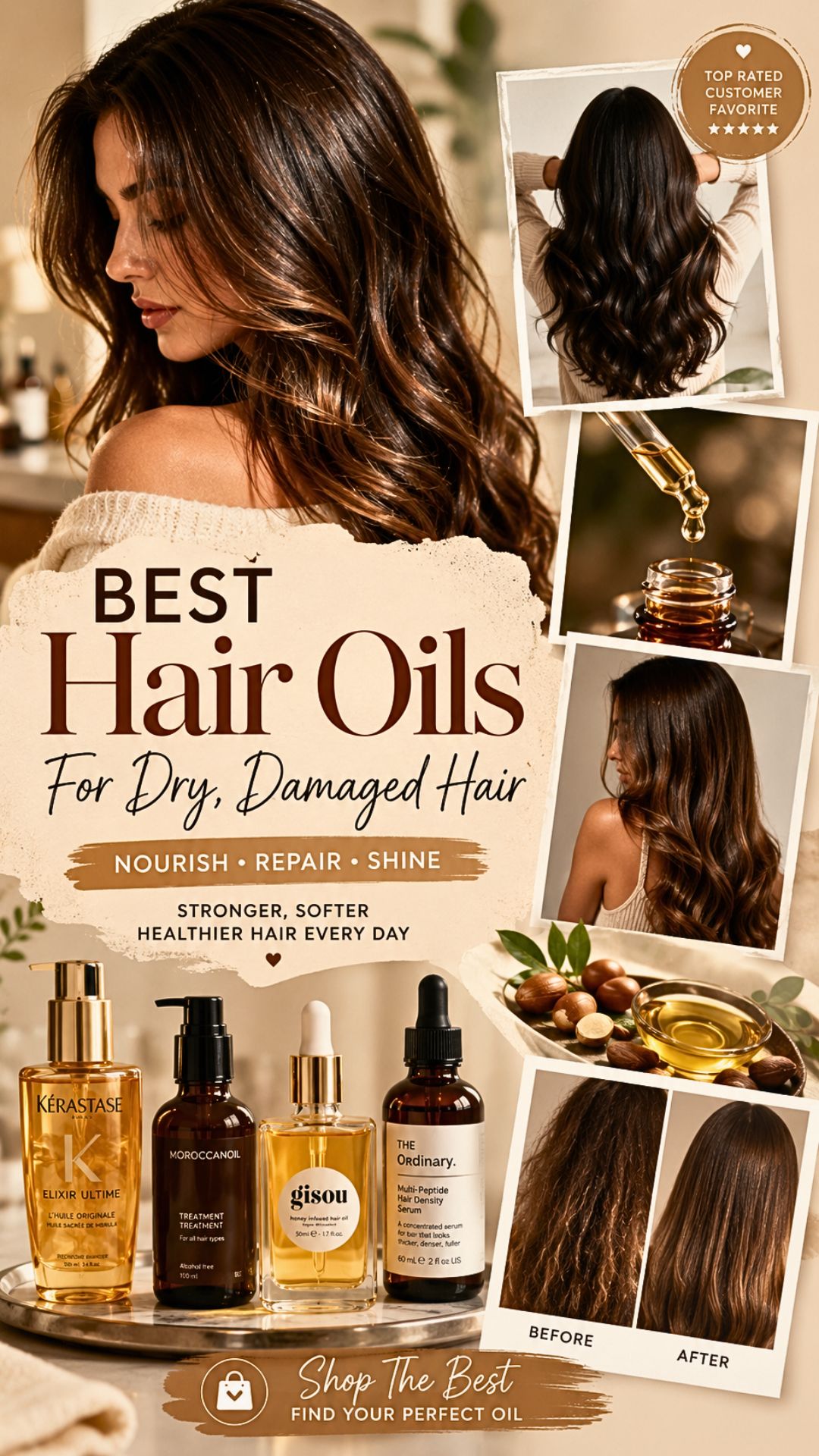
Best Hair Oils For Dry Damaged Hair: Restore Soft, Healthy, Shiny Strands Naturally
Dry, rough, and damaged hair can make every styling day feel like a challenge. Whether your hair is affected by heat tools, coloring, bleaching, sun exposure, or simply lacks moisture, the right hair oil can make a noticeable difference over time.
The Best Hair Oils do more than add shine. They help lock in moisture, smooth frizz, reduce breakage, and protect hair from future damage. When paired with a gentle hair care routine, a quality hair oil can leave your hair feeling softer, healthier, and easier to manage.
In this guide, you’ll discover how hair oils work, which oils are worth trying, how to use them correctly, and practical tips for getting the best results without weighing your hair down.
Why Dry Damaged Hair Needs Hair Oil
Healthy hair has a protective outer layer called the cuticle. When hair becomes damaged, that layer lifts, allowing moisture to escape. This leads to dryness, split ends, dullness, tangles, and frizz.
Hair oils help by creating a light protective layer around the hair shaft. While they cannot permanently repair damaged hair, they can improve its appearance, reduce moisture loss, and help prevent additional damage.
If your hair feels brittle or constantly looks dry even after conditioning, adding a nourishing oil to your routine may be the missing step.
Signs Your Hair Needs Extra Nourishment
You may benefit from adding a hair oil if you notice:
- Hair feels rough after washing
- Split ends appear frequently
- Hair tangles easily
- Frizz is difficult to control
- Hair lacks shine
- Bleached or color-treated hair feels dry
- Heat styling leaves hair stiff
- Hair breaks while brushing
Even naturally curly and coily hair often benefits from regular oil treatments because these hair types lose moisture more quickly.
What Makes the Best Hair Oils Worth Using?
Not every oil works the same way. Some oils are lightweight and ideal for fine hair, while others deeply nourish thick or curly textures.
The best options usually offer:
- Lightweight moisture without feeling greasy
- Frizz control
- Shine enhancement
- Split-end smoothing
- Heat styling support
- Easy application
- Pleasant but not overpowering scent
- Ingredients that suit your hair type
Choosing the right oil matters more than simply choosing the most expensive bottle.
Best Hair Oils For Dry Damaged Hair
1. Argan Oil
Argan oil is often called “liquid gold” for good reason.
It contains vitamin E, antioxidants, and fatty acids that help soften dry hair while reducing frizz. It absorbs quickly and usually doesn’t leave heavy residue.
Best for:
- Dry hair
- Color-treated hair
- Heat-damaged hair
- Fine to medium textures
Benefits:
- Adds shine
- Smooths flyaways
- Softens rough ends
- Helps improve manageability
2. Coconut Oil
Coconut oil remains one of the most popular natural hair treatments.
Unlike many oils, it penetrates the hair shaft rather than simply coating it. This can help reduce protein loss, especially when used before shampooing.
Best for:
- Thick hair
- Curly hair
- Very dry hair
Benefits:
- Deep conditioning
- Reduces breakage
- Helps prevent dryness
- Great as a weekly treatment
If you have very fine hair, use only a small amount since coconut oil can feel heavy.
3. Jojoba Oil
Jojoba oil closely resembles the natural oils produced by the scalp.
This makes it a great option for people who want moisture without excessive buildup.
Best for:
- Fine hair
- Oily scalp with dry ends
- Sensitive scalp
Benefits:
- Lightweight hydration
- Helps soften hair
- Adds healthy shine
- Reduces dryness
4. Rosemary Oil (Diluted)
Rosemary oil has become popular for supporting overall scalp health.
It should always be diluted with a carrier oil before applying to the scalp.
Best for:
- Dry scalp
- Weak-looking hair
- Hair care routines focused on healthier strands
Benefits:
- Supports scalp care
- Adds freshness
- Works well during scalp massage
5. Avocado Oil
Avocado oil contains vitamins A, D, and E along with healthy fatty acids.
It helps soften rough hair and works especially well on thick, coarse textures.
Best for:
- Thick hair
- Curly hair
- Damaged ends
Benefits:
- Deep moisture
- Smooth finish
- Helps reduce frizz
- Adds softness
6. Sweet Almond Oil
Sweet almond oil is a lightweight favorite for everyday use.
It spreads easily and leaves hair feeling silky instead of greasy.
Best for:
- Medium hair
- Straight hair
- Wavy hair
Benefits:
- Softens hair
- Adds shine
- Helps reduce dryness
- Easy daily styling
7. Grapeseed Oil
If you dislike heavy products, grapeseed oil is worth considering.
Its light texture makes it suitable for fine hair while still adding moisture.
Best for:
- Fine hair
- Thin hair
- Low-porosity hair
Benefits:
- Lightweight finish
- Controls flyaways
- Adds shine
- Doesn’t flatten hair
8. Marula Oil
Marula oil has become increasingly popular in salon-quality products.
It absorbs quickly while leaving hair smooth and glossy.
Best for:
- Frizzy hair
- Heat-damaged hair
- Medium hair
Benefits:
- Smooth texture
- Lightweight moisture
- Beautiful shine
- Soft finish
9. Olive Oil
Olive oil has been used in beauty routines for generations.
It works best as a deep conditioning treatment rather than an everyday styling oil.
Best for:
- Very dry hair
- Thick curls
- Coarse hair
Benefits:
- Rich moisture
- Helps soften damaged strands
- Excellent overnight treatment
10. Camellia Oil
Camellia oil has long been valued in beauty routines for its silky texture.
It feels surprisingly light while helping smooth rough hair.
Best for:
- Dry ends
- Fine to medium hair
- Everyday use
Benefits:
- Smooth finish
- Lightweight shine
- Easy styling
- Soft hair without buildup
Quick Comparison Table
| Hair Oil | Best For | Texture | Main Benefit |
|---|---|---|---|
| Argan Oil | Heat damage | Light | Shine and softness |
| Coconut Oil | Thick dry hair | Heavy | Deep nourishment |
| Jojoba Oil | Fine hair | Very light | Everyday moisture |
| Rosemary Oil | Scalp care | Light (diluted) | Healthy scalp routine |
| Avocado Oil | Coarse hair | Medium | Rich hydration |
| Sweet Almond Oil | Daily styling | Light | Smooth texture |
| Grapeseed Oil | Thin hair | Very light | Lightweight shine |
| Marula Oil | Frizz | Light | Silky finish |
| Olive Oil | Extremely dry hair | Heavy | Intensive treatment |
| Camellia Oil | Daily moisture | Light | Smooth healthy-looking hair |
How To Apply Hair Oil Correctly
Using too much oil is one of the biggest mistakes people make.
Follow these simple steps instead.
Step 1: Start Small
Use only 1–3 drops for short or fine hair.
Medium or long hair may need 3–6 drops.
Step 2: Warm It Between Your Hands
Rub the oil between your palms.
This helps distribute it evenly.
Step 3: Focus On Mid-Lengths And Ends
Most dryness happens from the middle of the hair down.
Avoid applying large amounts directly to your roots unless you’re doing a scalp treatment.
Step 4: Comb Through
Use a wide-tooth comb to spread the product evenly.
This prevents oily spots.
Step 5: Style As Normal
Allow the oil to absorb before using styling tools.
Some oils also help smooth the hair before blow drying.
Weekly Hair Oil Routine For Dry Hair
A simple routine often works better than using lots of products.
Before Wash Day
Massage oil into dry hair.
Leave it on for 30 minutes or overnight.
Wash with a gentle shampoo.
After Washing
Apply a tiny amount to damp hair.
Focus on the ends.
Let your hair air dry or style gently.
Between Washes
Use one or two drops to smooth flyaways and reduce frizz.
This keeps hair looking polished without making it greasy.
Helpful Tips For Better Results
Healthy hair isn’t only about products.
Small habits make a big difference.
- Trim split ends regularly.
- Limit heat styling.
- Use a heat protectant.
- Sleep on a satin pillowcase.
- Brush gently.
- Avoid tight hairstyles every day.
- Drink enough water.
- Eat foods rich in healthy fats and protein.
Hair oils work best when paired with an overall healthy hair routine.
Styling Tools That Work Well With Hair Oils
Hair oil often performs even better when combined with gentle styling tools.
Some helpful additions include:
- Wide-tooth combs for detangling
- Microfiber hair towels
- Satin scrunchies
- Heat protectant sprays
- Ceramic blow dryers
- Ionic hair dryers
- Boar bristle brushes
- Silk pillowcases
These tools help reduce friction and minimize future damage.
If you’re refreshing your routine, check the recommended styling tools that suit your hair type. Small upgrades can make daily styling much easier.
Common Mistakes To Avoid
Many people think using more oil means better results.
In reality, balance is key.
Avoid these common mistakes:
- Applying too much oil
- Using heavy oils on very fine hair
- Skipping shampoo after heavy oil treatments
- Applying oil to dirty hair repeatedly
- Using essential oils without dilution
- Expecting oils to permanently repair split ends
- Ignoring regular trims
Healthy hair comes from consistent care rather than quick fixes.
Choosing The Right Hair Oil For Your Hair Type
Fine Hair
Choose lightweight oils like:
- Grapeseed
- Jojoba
- Argan
These add shine without flattening your hair.
Medium Hair
Great choices include:
- Argan
- Sweet almond
- Marula
These balance moisture and movement.
Thick Hair
Look for richer oils such as:
- Coconut
- Avocado
- Olive
These provide deeper nourishment.
Curly Hair
Curly hair often benefits from:
- Coconut oil
- Avocado oil
- Argan oil
These help lock in moisture while reducing frizz.
Color-Treated Hair
Hair that has been colored or bleached usually responds well to:
- Argan oil
- Marula oil
- Camellia oil
These help hair appear smoother and shinier between salon visits.
Can You Combine Hair Oils?
Yes.
Many commercial hair serums combine multiple oils to create a balanced formula.
For example:
- Argan + Jojoba for lightweight hydration
- Coconut + Rosemary for scalp treatments
- Marula + Camellia for shine
- Avocado + Olive for deep conditioning
Using blends lets you enjoy several benefits without layering multiple products separately.
Final Thoughts
Finding the Best Hair Oils doesn’t have to be complicated. The right choice depends on your hair type, how much damage you’re dealing with, and whether you want everyday shine or deep weekly nourishment.
Remember that no oil can permanently repair damaged hair, but a good one can help protect your strands, reduce dryness, improve softness, and make styling much easier. Consistent care, gentle handling, and the right products will give you the best long-term results.
If you’re ready to upgrade your routine, shop the look, see the best tools for this look, or try this product for easier styling. A nourishing hair oil paired with quality styling tools can help your hair look healthier, smoother, and more manageable every day.