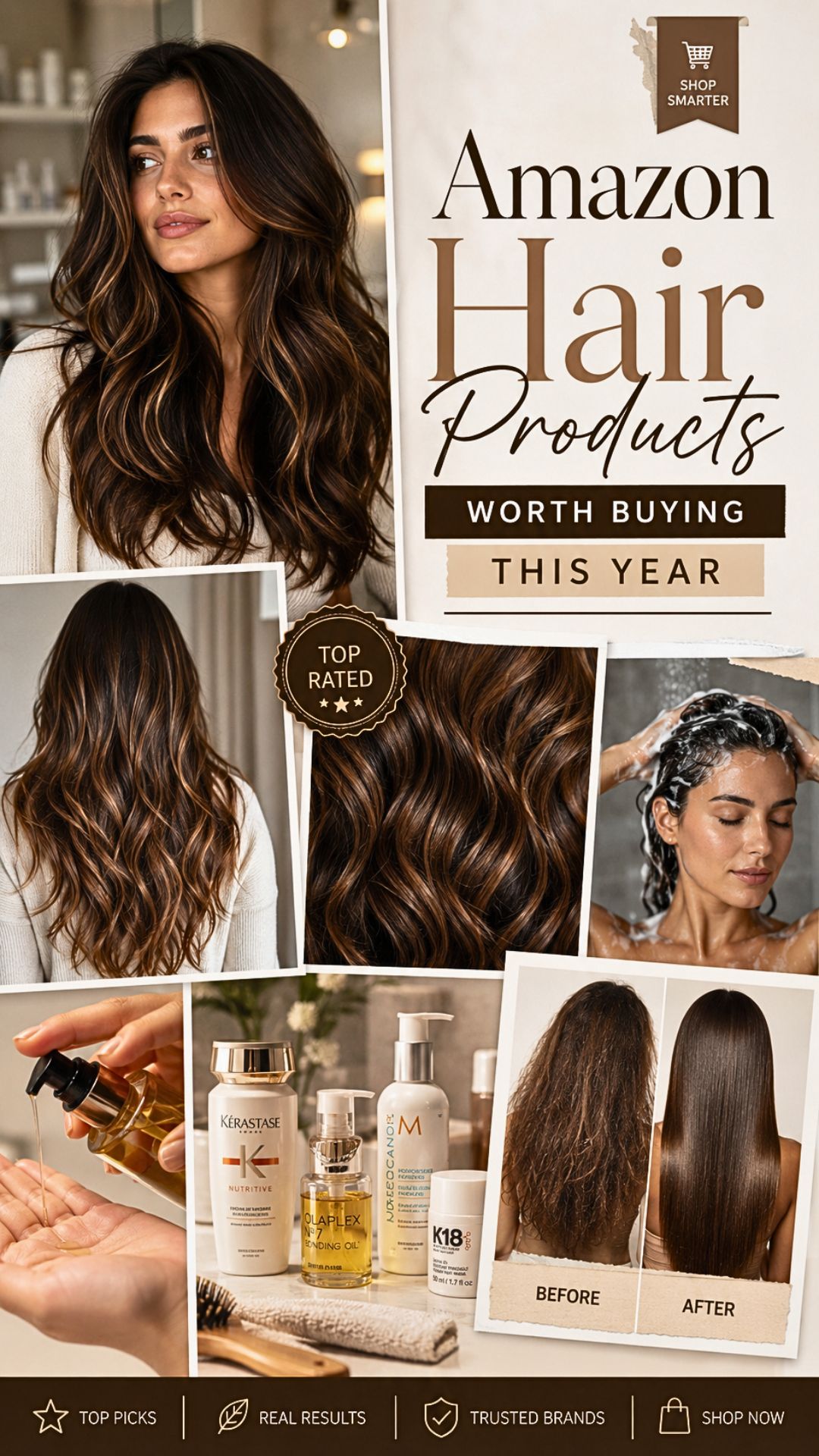
Best Products That Support Heat Damaged Hair Recovery
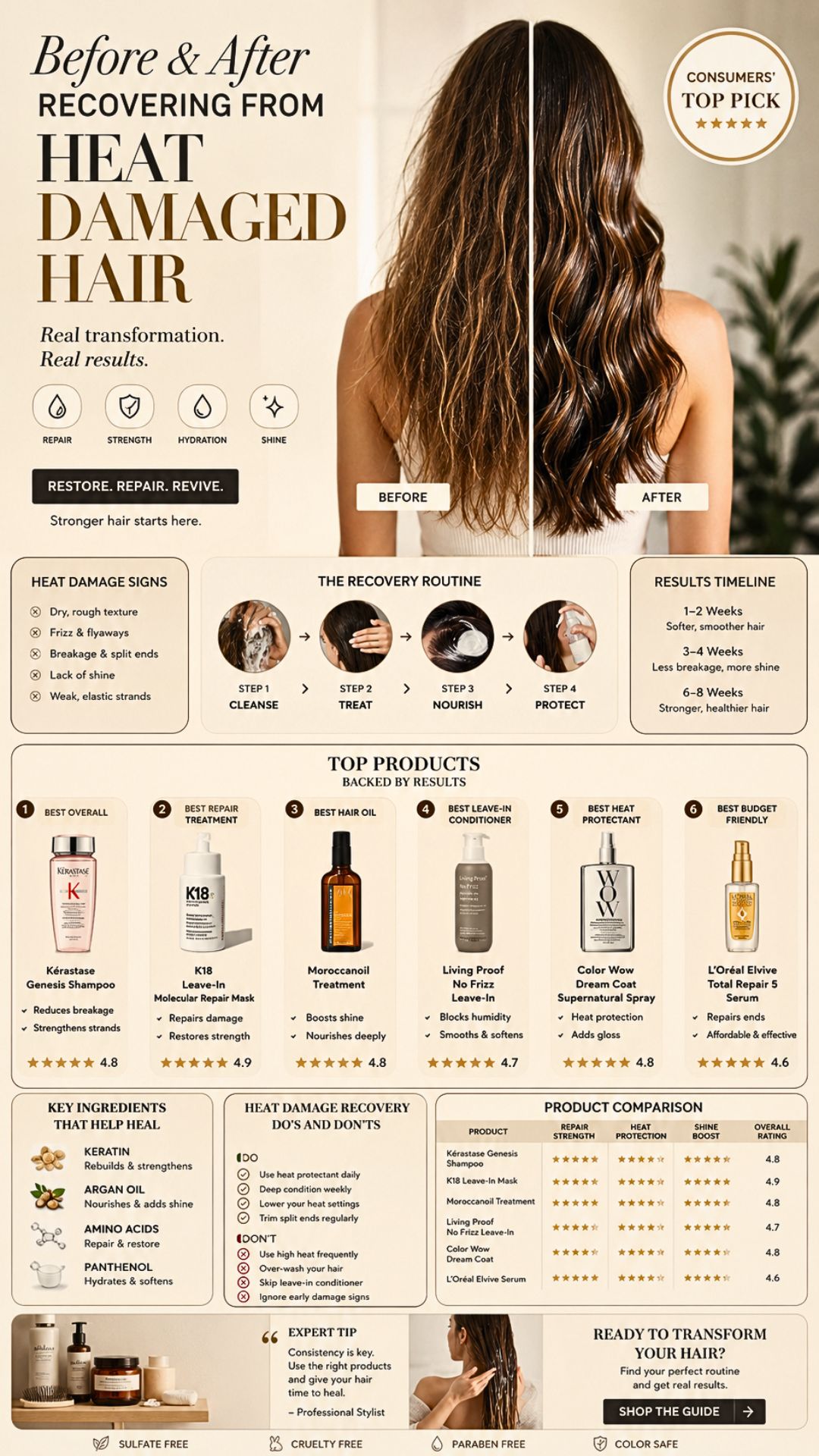
The right products cannot completely reverse damaged hair, but they can make it feel softer, reduce breakage, and protect new growth. Think of them as tools that help your hair look and feel healthier while it grows out.
If you’re building a simple recovery routine, these are the product categories worth considering.
1. Heat Protectant Spray
A heat protectant should be your first step before using any hot styling tool. It creates a lightweight barrier that helps reduce moisture loss and limits direct heat exposure.
Look for formulas that are:
- Lightweight
- Non-greasy
- Suitable for your hair type
- Effective up to the temperature you normally use
Soft CTA: See the best tools for this look by pairing your favorite styling tool with a quality heat protectant.
2. Moisturizing Hair Mask
Hair masks provide deeper hydration than regular conditioners. They help smooth rough strands and improve softness after repeated heat styling.
Choose ingredients like:
- Argan oil
- Shea butter
- Ceramides
- Coconut oil
- Avocado oil
- Aloe vera
Using a mask once or twice a week can make hair feel noticeably healthier over time.
3. Leave-In Conditioner
Leave-in conditioner keeps moisture locked into your hair throughout the day.
It can help:
- Reduce frizz
- Improve shine
- Make detangling easier
- Protect against daily dryness
- Add softness without feeling heavy
This is one of the easiest products to include in any routine.
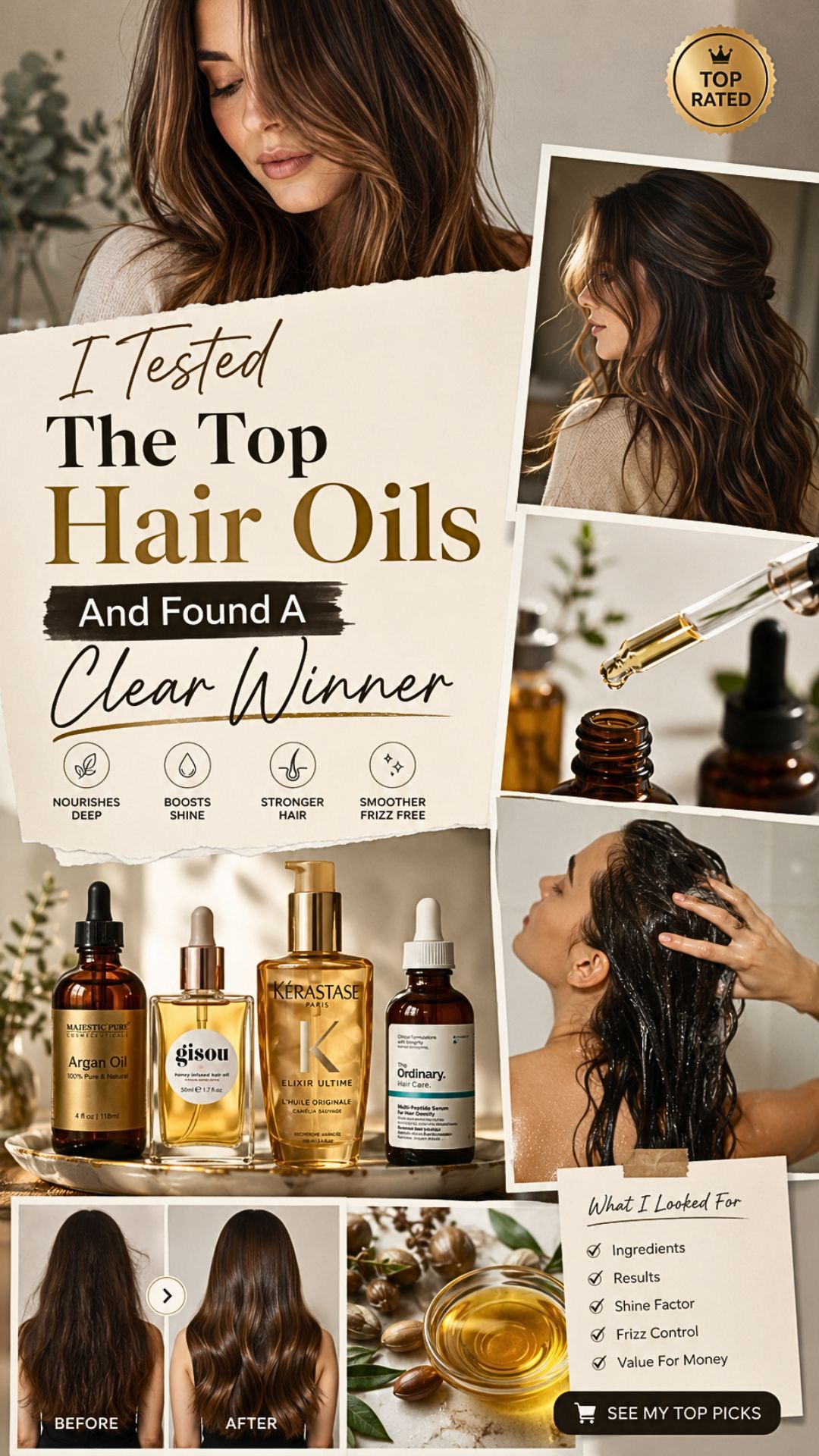
4. Hair Oil
A lightweight hair oil adds shine while helping smooth rough ends.
Apply only a small amount to the mid-lengths and ends.
Popular options include:
- Argan oil
- Jojoba oil
- Marula oil
- Camellia oil
Avoid applying large amounts to the roots unless the product specifically recommends it.
5. Wide-Tooth Comb
Healthy recovery isn’t just about products.
The right tools matter too.
A wide-tooth comb helps reduce pulling and snapping while detangling wet hair.
It is much gentler than a fine-tooth comb or stiff brush.
6. Microfiber Hair Towel
Regular bath towels create friction.
A microfiber towel absorbs water while reducing rubbing, helping minimize frizz and breakage.
It’s a simple upgrade that many people overlook.
7. Adjustable Temperature Styling Tools
If you still use heat occasionally, choose styling tools with adjustable temperature settings instead of a single high setting.
This allows you to use only as much heat as your hair actually needs.
Soft CTA: Check the recommended styling tools if you’re ready to replace older tools that run too hot.
A Simple Weekly Recovery Routine
You don’t need a shelf full of products to improve your hair. A consistent routine often works better than constantly trying new treatments.
Monday
- Wash with a gentle shampoo.
- Apply conditioner.
- Finish with leave-in conditioner.
Wednesday
- Refresh hair with a lightweight leave-in spray.
- Apply a small amount of hair oil to dry ends if needed.
Friday
- Wash again.
- Use a deep conditioning mask.
- Air dry whenever possible.
Weekend
- Wear a protective hairstyle.
- Avoid unnecessary heat.
- Massage your scalp for a few minutes.
This routine keeps hair hydrated without overwhelming it.
Hair Care Habits That Make a Big Difference
Small daily habits often have a bigger impact than expensive products.
Try to:
- Sleep on a satin or silk pillowcase.
- Avoid tight hairstyles every day.
- Protect hair from strong sunlight.
- Brush gently.
- Trim split ends regularly.
- Drink enough water.
- Eat protein-rich foods.
- Reduce heat styling whenever possible.
These simple habits help create healthier hair over time.
Recovery Timeline: What to Expect
Everyone’s hair is different, but many people notice gradual improvements with a consistent routine.
| Time | What You May Notice |
|---|---|
| First 2 Weeks | Hair feels softer after conditioning and is easier to detangle. |
| 1 Month | Less frizz and improved shine with regular moisture treatments. |
| 2–3 Months | Reduced breakage, healthier-looking ends after trimming, and better manageability. |
| 4–6 Months | Stronger new growth and an overall healthier appearance. |
| 6–12 Months | Significant improvement as healthy hair replaces older damaged sections. |
Remember, patience is part of the process. Hair grows slowly, so lasting change takes time.
Product Comparison Table
| Product Type | Main Benefit | Best For | How Often to Use |
|---|---|---|---|
| Heat Protectant Spray | Reduces heat exposure | Anyone using hot tools | Before every heat styling session |
| Moisturizing Shampoo | Gentle cleansing | Dry, damaged hair | Every wash |
| Deep Conditioning Mask | Intense hydration | Very dry or brittle hair | Once or twice weekly |
| Leave-In Conditioner | Daily moisture | Frizzy or tangled hair | After every wash |
| Hair Oil | Smooths ends and adds shine | Dry ends | As needed |
| Protein Treatment | Temporarily strengthens weak strands | Hair with excessive breakage | Every few weeks |
| Satin Pillowcase | Reduces friction overnight | All hair types | Every night |
| Wide-Tooth Comb | Gentle detangling | Wet, fragile hair | Every wash day |
Common Mistakes That Slow Hair Recovery
Many people accidentally make recovery harder by repeating the same habits that caused the damage.
Avoid these common mistakes.
Using Too Much Heat Too Soon
After seeing a little improvement, it’s tempting to return to daily heat styling.
Instead, continue limiting heat while your hair grows stronger.
Ignoring Split Ends
Split ends don’t repair themselves.
Without trims, splits can travel farther up the hair shaft, causing even more damage.
Regular dusting or trimming helps keep hair looking healthy.
Washing With Very Hot Water
Hot water can leave hair feeling dry.
Warm or cool water helps preserve moisture and smooth the cuticle.
Using Too Many Products
More isn’t always better.
Layering too many heavy products can weigh hair down and cause buildup.
Stick with a simple routine that works.
Brushing Aggressively
Rough brushing is one of the quickest ways to create breakage.
Take your time, especially when your hair is wet.
Expecting Overnight Results
Hair recovery is gradual.
Many improvements happen over several months rather than a few days.
Consistency matters far more than quick fixes.
How to Protect Healthy Hair Going Forward
Once your hair starts looking healthier, you’ll want to keep it that way.
Follow these long-term habits:
- Always use heat protectant.
- Choose lower heat settings.
- Give your hair heat-free days each week.
- Deep condition regularly.
- Trim damaged ends every few months.
- Stay hydrated.
- Protect your hair while sleeping.
- Avoid overlapping chemical treatments when possible.
These habits help prevent future damage and keep your hair looking its best.
The Real Before And After Story
One of the most rewarding parts of a hair recovery journey isn’t just how your hair looks—it’s how it feels.
At first, your hair may seem rough, tangled, and difficult to style. As weeks pass, you’ll likely notice smoother strands, fewer broken hairs, and better shine. Months later, healthy new growth becomes more noticeable, and styling often becomes quicker and easier.
Recovery isn’t about achieving perfect hair. It’s about making steady improvements that add up over time. Every gentle wash, nourishing treatment, and heat-free day contributes to stronger, healthier strands.
Celebrate small milestones along the way. A little less frizz, fewer split ends, or easier detangling are all signs that your routine is working.
Conclusion
Recovering From Heat Damaged Hair takes time, but it is absolutely worth the effort. The biggest improvements come from simple, consistent habits rather than miracle products. Gentle cleansing, deep conditioning, regular trims, and using less heat can transform the look and feel of your hair over the coming months.
If you still enjoy styling your hair, you don’t have to give it up completely. Instead, invest in better habits and better tools. A quality heat protectant, a moisturizing hair mask, and a styling tool with adjustable temperature settings can make a real difference while helping you maintain healthier hair.
When you’re ready to upgrade your routine, check the recommended styling tools, shop the look, or try this product for easier styling. Choosing products that suit your hair type can help you maintain the healthy, shiny results you’ve worked so hard to achieve.