Hair Washing Habits That Damage Hair Growth: Stop These Mistakes for Healthier, Stronger Hair
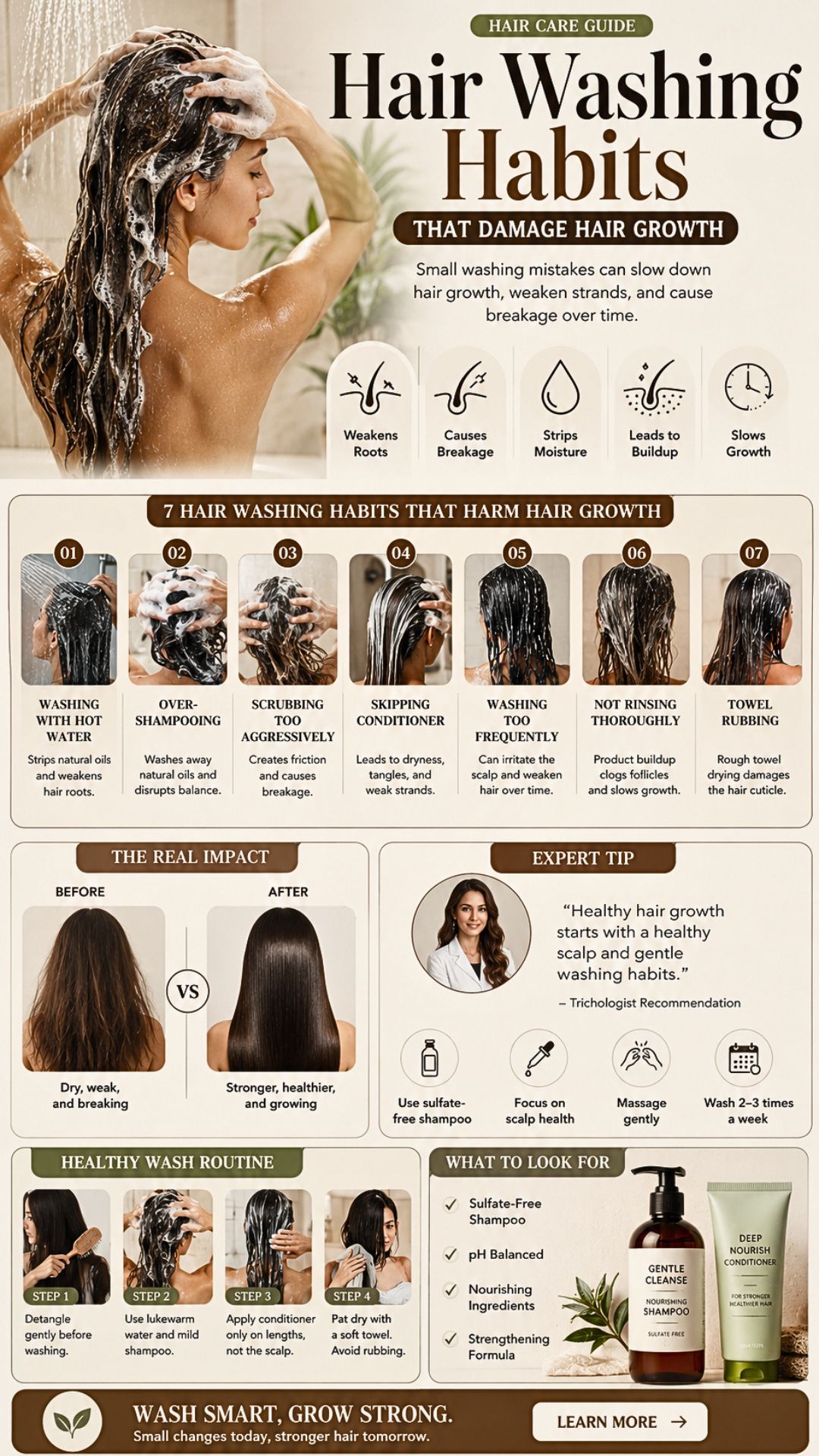
Healthy hair starts with healthy habits. Many people spend money on expensive shampoos, serums, and hair masks but still struggle with thinning, breakage, or slow growth. The reason is often much simpler than they think. Their daily hair washing routine may be working against them.
Your Hair Washing Habits can affect your scalp, hair strength, and overall hair health. While washing your hair keeps it clean, doing it the wrong way can weaken strands, dry out your scalp, and increase breakage. Hair grows from healthy follicles, so caring for your scalp is just as important as caring for your hair.
In this guide, you’ll learn the most common washing mistakes that may be hurting your hair growth, how to fix them, and which products can make your routine easier without making it feel complicated.
Why Hair Washing Matters for Hair Growth
Hair growth begins beneath the scalp. While shampoo cannot make hair grow faster on its own, a clean and balanced scalp creates the right environment for healthy follicles.
Good washing habits help:
- Remove oil and product buildup
- Keep hair follicles clear
- Reduce scalp irritation
- Prevent unnecessary breakage
- Improve the effectiveness of hair treatments
On the other hand, poor washing habits can leave your hair dry, weak, and more likely to snap before it reaches its full length.
Hair Washing Habits That May Be Damaging Your Hair
1. Washing Your Hair Too Often
Many people think washing every day keeps hair healthier. In reality, daily shampooing can remove the scalp’s natural oils.
Those oils help protect the hair shaft and keep strands flexible. Without them, hair becomes dry and breaks more easily.
How often you should wash depends on your hair type:
| Hair Type | Suggested Washing Frequency |
|---|---|
| Oily hair | Every 1–2 days |
| Fine hair | Every 2–3 days |
| Wavy hair | Every 2–4 days |
| Curly hair | Every 3–7 days |
| Coily hair | Every 5–10 days |
If your scalp feels clean and comfortable, there is usually no need to wash more often.
2. Waiting Too Long Between Washes
The opposite mistake can also cause problems.
Leaving oil, sweat, dry shampoo, and styling products on your scalp for too long may lead to buildup. Excess buildup can make your scalp itchy and may interfere with healthy hair growth.
Signs you should wash your hair include:
- Itchy scalp
- Heavy or greasy roots
- Visible product buildup
- Unpleasant odor
- Flat, lifeless hair
Finding the right balance is more important than following someone else’s schedule.
3. Using Water That Is Too Hot
A hot shower feels relaxing, but very hot water can dry out both your scalp and hair.
Hot water removes protective oils faster, making hair rough and harder to manage.
Instead:
- Use lukewarm water for washing.
- Finish with cool water if you like extra shine.
- Avoid extremely hot showers every day.
This simple change can leave hair feeling softer and reduce dryness.
4. Applying Shampoo to the Entire Hair Length
Shampoo is made to clean your scalp, not your ends.
When you rub shampoo into the full length of your hair, especially if you scrub aggressively, you increase friction and dryness.
Instead:
- Apply shampoo mainly to your scalp.
- Massage gently with your fingertips.
- Let the lather rinse through the lengths naturally.
This cleans your hair without removing too much moisture.
5. Scrubbing the Scalp Too Hard
Some people believe a hard scrub cleans better.
In reality, aggressive scrubbing can irritate the scalp and even damage fragile hairs near the roots.
A gentle fingertip massage is enough.
Think of cleaning your scalp like washing your face. Gentle pressure works much better than harsh rubbing.
6. Choosing the Wrong Shampoo
Not every shampoo works for every hair type.
For example:
- Dry hair needs moisturizing ingredients.
- Oily hair benefits from balancing formulas.
- Color-treated hair needs gentle, sulfate-free options.
- Curly hair usually prefers hydrating cleansers.
Reading product labels can save both money and frustration.
Look for ingredients such as:
- Glycerin
- Aloe vera
- Panthenol
- Argan oil
- Coconut oil
- Ceramides
If your scalp is sensitive, avoid heavily fragranced products whenever possible.
7. Skipping Conditioner
Some people avoid conditioner because they worry it causes oily hair.
In reality, conditioner protects the hair shaft and helps reduce breakage.
Use conditioner mainly on:
- Mid-lengths
- Ends
Avoid applying heavy conditioner directly to the scalp unless the product is designed for scalp care.
Healthy hair that breaks less often naturally appears to grow longer.
8. Washing Hair Too Quickly
Many people finish shampooing in less than one minute.
This often leaves oil and residue behind.
Instead:
- Wet hair thoroughly.
- Massage shampoo for about one minute.
- Rinse completely.
- Apply conditioner.
- Leave conditioner on for two to three minutes before rinsing.
Giving products enough time helps them work better.
9. Not Rinsing Completely
Leftover shampoo or conditioner can cause buildup.
Residue may leave hair looking dull and make the scalp feel itchy.
Take a little extra time to rinse until the water runs clear and your hair feels clean.
10. Rough Drying With a Towel
One of the biggest causes of breakage happens after washing.
Rubbing wet hair with a rough towel creates friction.
Instead:
- Gently squeeze out water.
- Pat hair dry.
- Use a microfiber towel or a soft cotton T-shirt.
Wet hair is at its weakest, so gentle handling makes a noticeable difference over time.
11. Brushing Wet Hair Aggressively
Wet strands stretch easily.
Pulling a regular brush through wet knots often leads to unnecessary breakage.
Instead:
- Use a wide-tooth comb.
- Begin at the ends.
- Slowly work upward.
- Use a leave-in conditioner for extra slip.
This simple habit can help preserve hair length.
12. Ignoring Your Scalp
Healthy hair begins with healthy skin.
If your scalp feels itchy, flaky, or oily all the time, your washing routine may need adjusting.
Pay attention to changes.
Sometimes switching shampoos or adding a gentle scalp exfoliator once every week or two can improve scalp comfort.
Signs Your Hair Washing Routine Needs Improvement
Your current routine may be causing problems if you notice:
- Hair snapping easily
- Excessive dryness
- Constant frizz
- Oily roots only one day after washing
- Itchy scalp
- Flakes
- Dull appearance
- More shedding caused by breakage
Small changes often make a noticeable difference after several weeks.
A Simple Hair Washing Routine for Healthier Hair
If you’re unsure where to begin, try this beginner-friendly routine.
Step 1: Brush Before Washing
Remove loose tangles before getting your hair wet.
This reduces knots later.
Step 2: Wet Hair Thoroughly
Use lukewarm water for one to two minutes.
Fully soaked hair allows shampoo to spread more evenly.
Step 3: Shampoo the Scalp
Focus only on the roots.
Massage gently using your fingertips.
Step 4: Rinse Well
Do not rush.
A complete rinse removes dirt and leftover cleanser.
Step 5: Apply Conditioner
Apply from the middle of your hair to the ends.
Leave it on for a few minutes.
Step 6: Final Rinse
Rinse until your hair feels smooth but not slippery.
Step 7: Dry Gently
Use a microfiber towel.
Avoid twisting or rubbing.
Step 8: Protect Before Styling
If you use heat tools, always apply a heat protectant first.
Helpful Hair Washing Tips You Can Start Today
- Wash according to your hair type instead of following trends.
- Massage your scalp gently.
- Replace rough towels with microfiber.
- Avoid extremely hot water.
- Trim split ends regularly.
- Keep brushes clean.
- Deep condition once a week if your hair feels dry.
- Protect hair from excessive heat styling.
- Stay hydrated and eat enough protein for overall hair health.
Recommended Products That Can Support a Better Hair Routine
You do not need a shelf full of products. A few well-chosen essentials can make your routine easier.
| Product | Why It Helps |
|---|---|
| Gentle sulfate-free shampoo | Cleans without over-drying |
| Lightweight conditioner | Reduces breakage and improves softness |
| Leave-in conditioner | Makes detangling easier |
| Microfiber towel | Minimizes friction after washing |
| Wide-tooth comb | Prevents unnecessary pulling |
| Heat protectant spray | Helps reduce heat damage |
| Scalp massager | Provides a gentle massage while shampooing |
| Weekly hair mask | Adds moisture to dry hair |
If you’re shopping for new products, check the recommended styling tools and hair care essentials that match your hair type instead of choosing products based only on trends.
Common Hair Washing Mistakes vs Better Habits
| Common Mistake | Better Habit |
|---|---|
| Using very hot water | Wash with lukewarm water |
| Shampooing the entire hair length | Focus on the scalp |
| Scrubbing aggressively | Massage gently |
| Skipping conditioner | Condition the mid-lengths and ends |
| Rubbing hair dry | Pat dry with microfiber |
| Brushing from the roots | Detangle from the ends upward |
| Using the wrong shampoo | Choose products for your hair type |
| Washing every day without need | Adjust washing frequency based on your scalp |
Healthy Hair Growth Starts With Better Habits
Growing longer, healthier hair is rarely about finding one miracle product. It is usually the result of many small habits repeated consistently.
Changing the way you wash your hair can reduce breakage, improve scalp health, and help your hair retain more length over time. Be patient with the process. Healthy hair changes happen gradually, not overnight.
If you’re updating your routine, see the best tools for this look, shop the look, or try this product for easier styling by choosing gentle shampoos, nourishing conditioners, and protective styling tools that fit your hair type. Small improvements today can lead to stronger, healthier-looking hair in the months ahead.