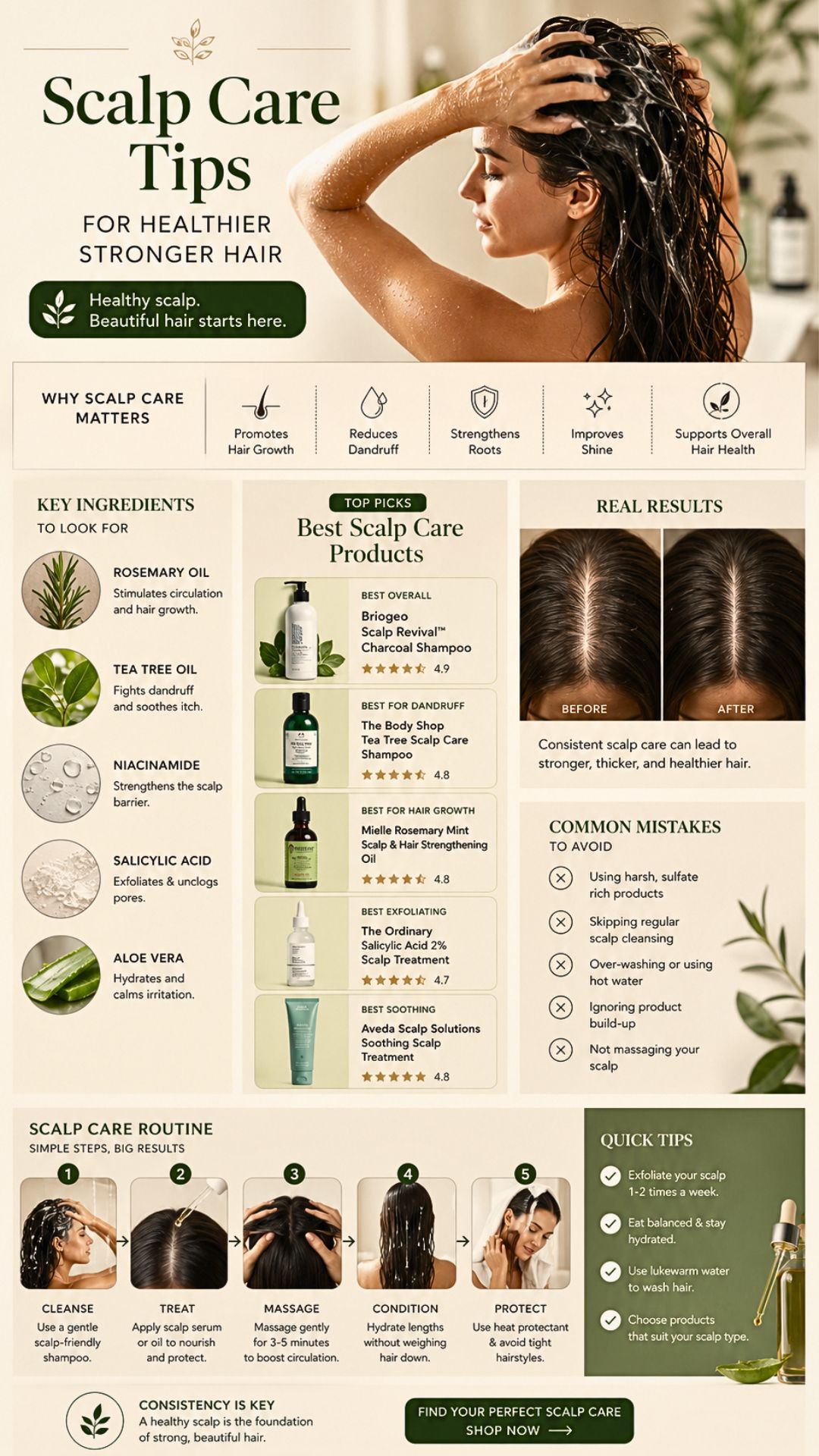
Scalp Care Tips For Healthier Stronger Hair
Healthy hair starts at the roots. While many people spend time choosing shampoos, conditioners, and styling products, they often forget about the skin beneath their hair. A healthy scalp creates the best environment for stronger, shinier, and fuller-looking hair.
These Scalp Care Tips can help you improve your hair routine without making it complicated. Whether you struggle with dryness, oiliness, flakes, buildup, or slow hair growth, small daily habits can make a noticeable difference over time. The goal is not perfection but consistency.
In this guide, you’ll learn simple ways to care for your scalp, the best products and tools to consider, common mistakes to avoid, and easy habits that support healthier, stronger hair.
Why Scalp Care Matters
Think of your scalp as the soil in a garden. Healthy soil helps plants grow, while poor soil makes it difficult for them to thrive. Your hair follicles work in much the same way.
When your scalp stays clean, balanced, and well-moisturized, hair follicles can function more effectively. This creates a better environment for healthy hair growth while reducing common issues like irritation, itching, excess oil, and product buildup.
Good scalp care may help:
- Reduce dandruff and flakes
- Remove excess oil and dirt
- Minimize product buildup
- Improve scalp comfort
- Support healthier-looking hair
- Keep hair feeling lighter and cleaner
- Reduce breakage caused by unhealthy scalp conditions
Scalp Care Tips That Make a Big Difference
1. Wash Your Hair Based on Your Scalp Type
There is no perfect washing schedule for everyone.
If your scalp becomes oily quickly, washing every one to two days may work best. If your scalp is dry, washing two or three times each week is often enough.
Pay attention to how your scalp feels instead of following someone else’s routine.
A clean scalp is healthier than one covered with excess oil and styling product residue.
2. Choose the Right Shampoo
Not every shampoo works for every scalp.
Pick a formula based on your scalp rather than your hair length.
For example:
- Oily scalp: Clarifying shampoo
- Dry scalp: Moisturizing shampoo
- Sensitive scalp: Fragrance-free gentle shampoo
- Flaky scalp: Anti-dandruff shampoo when needed
- Color-treated hair: Sulfate-free shampoo
Using the right cleanser can make your routine much more effective.
3. Massage Your Scalp During Every Wash
A gentle scalp massage feels relaxing and helps distribute shampoo evenly.
Use your fingertips instead of your nails.
Massage for one to three minutes using small circular motions.
This helps loosen dirt, oil, and product buildup while making shampoo more effective.
4. Exfoliate Your Scalp Occasionally
Just like facial skin, the scalp can collect dead skin cells.
Using a scalp scrub or chemical exfoliating treatment every few weeks may help remove buildup and leave your scalp feeling fresh.
Do not exfoliate too often. Once every one to three weeks is enough for most people.
5. Avoid Heavy Product Buildup
Dry shampoo, hairspray, wax, mousse, and gels can collect on the scalp.
Over time, buildup may leave your scalp feeling greasy or itchy.
If you use styling products regularly, consider using a clarifying shampoo every few weeks to remove residue.
6. Keep Your Scalp Hydrated
Dryness can lead to itching and discomfort.
Drink enough water and use lightweight moisturizing scalp products when needed.
Avoid applying heavy oils every day unless your scalp truly needs them.
Too much oil can trap dirt and make cleansing harder.
7. Protect Your Scalp From Sun Exposure
Your scalp can get sunburned just like your skin.
If your hair is thin or you spend a lot of time outdoors, wear a hat or use a scalp sunscreen spray designed for hair.
Protecting your scalp also helps reduce dryness caused by UV exposure.
8. Eat Foods That Support Healthy Hair
Healthy hair begins from within.
A balanced diet supports healthy hair and scalp function.
Try adding foods rich in:
- Protein
- Iron
- Zinc
- Omega-3 fatty acids
- Vitamin D
- Biotin-rich foods
- Fresh fruits
- Leafy vegetables
- Nuts and seeds
A healthy diet works together with a healthy hair routine.
9. Reduce Heat Styling
Frequent heat styling affects both your hair and scalp.
If possible:
- Lower your styling temperature.
- Use a heat protectant.
- Allow hair to air dry occasionally.
- Avoid placing hot tools directly against your scalp.
Your scalp will stay more comfortable, and your hair will experience less damage.
10. Brush Your Hair Gently
Brushing helps spread natural oils from the scalp throughout the hair.
Choose a gentle brush and avoid pulling through tangles aggressively.
Always begin brushing from the ends before working upward.
11. Sleep on a Clean Pillowcase
Your pillowcase collects oil, sweat, and hair products.
Changing it every few days helps keep your scalp cleaner.
Silk or satin pillowcases may also reduce hair friction and help minimize breakage.
12. Manage Stress
Stress can affect many parts of your body, including your hair.
While everyone experiences stress differently, creating healthy habits can support overall well-being.
Simple ideas include:
- Walking outdoors
- Meditation
- Deep breathing
- Better sleep
- Regular exercise
- Taking breaks from work
A healthy lifestyle supports healthy hair over time.
Build an Easy Weekly Scalp Care Routine
You don’t need a complicated routine to see improvement.
Daily
- Brush gently
- Drink enough water
- Avoid scratching your scalp
- Protect your scalp from strong sunlight
Two to Three Times Per Week
- Wash with the right shampoo
- Massage your scalp
- Condition hair lengths
Every One to Three Weeks
- Use a clarifying shampoo
- Exfoliate the scalp
- Deep clean styling tool residue
Consistency matters more than using many products.
Best Products and Tools That Support Scalp Health
The right products can make your routine easier without overwhelming your bathroom shelf.
Gentle Scalp Shampoo
A gentle shampoo removes dirt while helping maintain your scalp’s natural moisture balance.
This is one of the most important products for any healthy hair routine.
Soft tip: Try this product for easier styling because clean roots often create more volume and freshness.
Clarifying Shampoo
If you regularly use dry shampoo or styling products, a clarifying shampoo helps remove stubborn buildup.
Use it only occasionally rather than every wash.
Silicone Scalp Massager
A silicone scalp brush provides a gentle massage during shampooing.
Many people enjoy the relaxing feeling, and it helps distribute shampoo evenly across the scalp.
Soft tip: Check the recommended styling tools if you want a simple upgrade to your wash day routine.
Lightweight Scalp Serum
If your scalp feels dry between washes, a lightweight serum may help add moisture without leaving heavy residue.
Choose formulas made for scalp use rather than regular hair oils.
Wide-Tooth Comb
Wet hair is more delicate.
A wide-tooth comb reduces pulling and helps prevent unnecessary breakage after washing.
Step-By-Step Healthy Scalp Routine
Follow this easy routine from start to finish.
Step 1
Brush your hair before washing to loosen tangles.
Step 2
Wet your hair thoroughly with lukewarm water.
Step 3
Apply shampoo directly to your scalp.
Step 4
Massage gently using your fingertips for one to three minutes.
Step 5
Rinse completely.
Step 6
Apply conditioner only to the mid-lengths and ends unless your product specifically says it is safe for the scalp.
Step 7
Rinse well.
Step 8
Pat your hair dry instead of rubbing it roughly.
Step 9
Use heat protection before blow drying.
Step 10
Style gently and avoid excessive tension.
Simple Habits That Help Keep Your Scalp Healthy
Small changes often produce better long-term results than dramatic routines.
Try to:
- Wash hair before heavy oil buildup develops.
- Clean brushes regularly.
- Replace old hair ties.
- Drink plenty of water.
- Eat balanced meals.
- Sleep well.
- Keep hats clean.
- Avoid picking at flakes.
- Be patient with new routines.
- Stay consistent.
Comparison of Common Scalp Care Habits
| Habit | Why It Helps | Best Frequency |
|---|---|---|
| Gentle shampoo | Removes dirt and oil | Every wash |
| Scalp massage | Helps distribute shampoo and loosen buildup | Every wash |
| Clarifying shampoo | Removes styling residue | Every 2–4 weeks |
| Scalp exfoliation | Clears dead skin cells | Every 1–3 weeks |
| Clean pillowcase | Reduces oil and dirt transfer | Every few days |
| Brush cleaning | Removes oils and product residue | Weekly |
| Heat protection | Helps reduce heat damage | Before heat styling |
| Balanced diet | Supports healthy hair growth | Daily |
Common Scalp Care Mistakes to Avoid
Even good intentions can sometimes lead to unhealthy habits.
Avoid these common mistakes:
- Washing with very hot water
- Scratching your scalp with your nails
- Applying heavy oils every day
- Ignoring product buildup
- Using too much dry shampoo
- Skipping shampoo because hair “looks fine”
- Using harsh shampoos too often
- Pulling hairstyles too tightly
- Overusing heat tools
- Expecting instant results
Healthy scalp care is a long-term habit rather than a quick fix.
Signs Your Scalp Routine Is Working
You may notice gradual improvements such as:
- Less itching
- Reduced flakes
- Cleaner roots
- Hair that feels lighter
- Better-looking shine
- Less visible oil buildup
- More comfortable scalp
- Easier styling
- Healthier-looking strands
These changes usually happen slowly with regular care.
When to Seek Professional Advice
While many scalp concerns improve with a consistent routine, some symptoms deserve professional attention.
Consider seeing a dermatologist if you experience:
- Persistent itching
- Painful scalp sores
- Heavy dandruff that does not improve
- Sudden or excessive hair shedding
- Redness or swelling
- Signs of infection
Getting the right diagnosis can help you choose the most effective treatment.
Final Thoughts
Healthy hair begins long before styling products or expensive treatments. It starts with caring for the scalp every week through gentle cleansing, proper hydration, balanced nutrition, and simple daily habits.
You don’t need dozens of products to build a good routine. A quality shampoo, an occasional clarifying wash, a gentle scalp massage, and consistent care are often enough to make your hair feel cleaner, healthier, and easier to manage over time.
If you’re ready to upgrade your routine, check the recommended styling tools, shop the look, or try this product for easier styling. Small improvements to your scalp care routine today can support healthier, stronger-looking hair for years to come.