
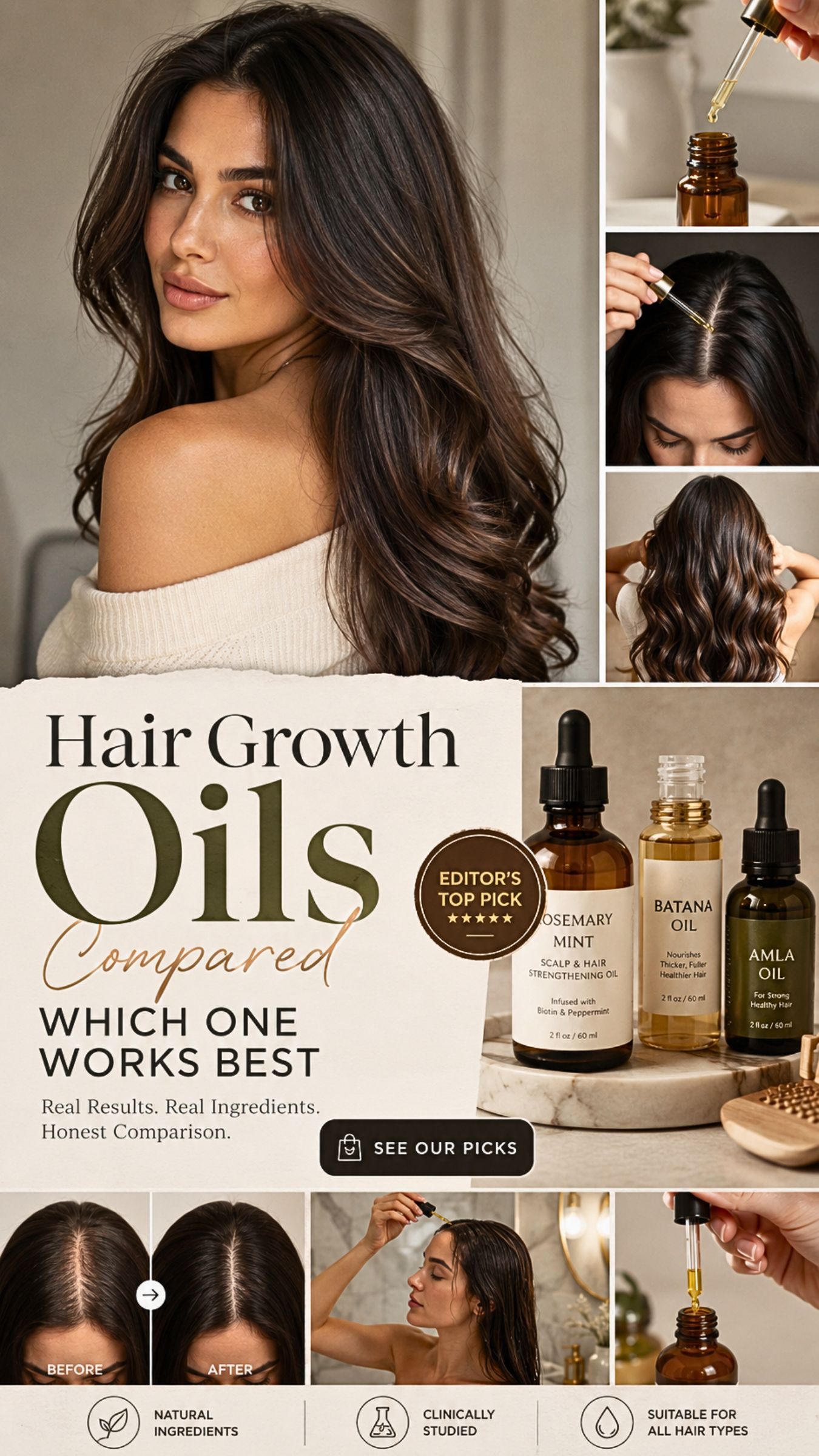
Hair Growth Oils Compared: Which One Works Best?
Introduction
Have you ever stood in front of a shelf full of hair oils and wondered which one is actually worth your money? I know I have. Every bottle promises thicker hair, faster growth, and less hair fall. Some people swear by coconut oil, while others praise rosemary oil or castor oil. With so many choices, it can feel confusing to know what truly works.
The truth is that no single oil is perfect for everyone. Hair growth depends on many things, including your scalp health, diet, stress level, hormones, and daily habits. Still, the right oil can create a healthier scalp, reduce breakage, improve moisture, and support stronger hair over time. Think of hair oil like watering a garden. Healthy soil gives plants the best chance to grow. In the same way, a healthy scalp gives your hair the best chance to become thick and strong.
In this guide, we will compare fifteen popular hair growth oils. We will look at their strengths, who should use them, and what makes each one special. By the end, you will have a much clearer idea of which oil matches your hair type and goals instead of buying products based only on social media trends.
Quick Benefits of Using Hair Growth Oils
- Improve scalp moisture
- Reduce hair breakage
- Support stronger hair strands
- Help calm dry and itchy scalp
- Add natural shine
- Improve hair softness
- Protect against split ends
- Support healthier hair over time
Hair Growth Oils Comparison Table
| Hair Oil | Best For | Main Benefit | Hair Type |
|---|---|---|---|
| Rosemary Oil | Hair thinning | Supports thicker-looking hair | All hair types |
| Castor Oil | Weak hair | Deep nourishment | Dry hair |
| Coconut Oil | Hair breakage | Protein protection | Normal to dry hair |
| Argan Oil | Frizz | Smooth finish | Damaged hair |
| Jojoba Oil | Oily scalp | Balances scalp oil | Oily hair |
| Peppermint Oil | Slow growth | Refreshes scalp | All hair types |
| Almond Oil | Dry ends | Vitamin-rich moisture | Dry hair |
| Olive Oil | Damaged strands | Deep conditioning | Thick hair |
| Black Seed Oil | Hair fall | Antioxidant support | All hair types |
| Avocado Oil | Brittle hair | Healthy fats | Dry hair |
| Grapeseed Oil | Fine hair | Lightweight moisture | Fine hair |
| Amla Oil | Weak roots | Traditional strengthening | All hair types |
| Onion Oil | Hair shedding | Rich in sulfur compounds | Thin hair |
| Tea Tree Oil | Dandruff | Cleans scalp | Oily scalp |
| Pumpkin Seed Oil | Thinning hair | Supports scalp health | Men and women |
1. Rosemary Oil – The Best Overall Choice for Hair Growth
If someone asked me to recommend only one hair oil for growth, rosemary oil would be at the top of my list. It has become popular for good reason. Research suggests that rosemary oil may help support healthier hair growth by improving blood flow around the hair follicles. Better circulation means the follicles receive more oxygen and nutrients, creating a healthier place for new hair to grow. While it is not magic, many people notice less shedding after using it consistently for several months.
Another reason rosemary oil stands out is that it feels light on the scalp. Unlike thicker oils, it does not leave hair feeling heavy or greasy when mixed with a carrier oil. It also works for many hair types, from straight hair to curls. I like to think of rosemary oil as a patient friend. It does not promise overnight results, but it quietly supports your hair week after week. Massage a few drops mixed with coconut or jojoba oil into your scalp two or three times each week. Consistency matters much more than using large amounts.
2. Castor Oil – The Thick Oil That Feels Like a Deep Treatment
Castor oil has been passed down through families for generations. Many people remember watching their parents or grandparents warm it slightly before applying it to the scalp. The oil feels very thick and rich, almost like liquid honey. While there is little proof that castor oil directly speeds up hair growth, it is excellent at keeping hair soft and reducing breakage. Less breakage means hair can grow longer because fewer strands snap off.
One thing to remember is that castor oil is very dense. Using too much can make hair difficult to wash. Mixing it with lighter oils such as coconut or almond oil creates a better balance. I often compare castor oil to a heavy winter blanket. It wraps hair in moisture and protects it from dryness. People with dry, coarse, or damaged hair often enjoy the rich feeling, while those with very fine hair may prefer something lighter. Regular use can leave hair looking thicker simply because it stays healthier from root to tip.
3. Coconut Oil – The Everyday Hero for Stronger Hair
Coconut oil has earned its place as one of the world’s favorite hair oils. It is simple, affordable, and easy to find almost anywhere. One of its biggest strengths is its ability to move inside the hair shaft instead of sitting only on the surface. This helps reduce protein loss, which is important because hair is mostly made of protein. Stronger strands mean less breakage during brushing, washing, and styling.
Many people already have coconut oil in their kitchen, making it one of the easiest oils to add to a weekly routine. Warm a small amount between your hands and gently massage it into your scalp and hair before shampooing. Leave it on for at least thirty minutes or overnight if your hair is very dry. I like to compare coconut oil to giving your hair a healthy meal. It feeds dry strands with moisture and protection, helping them stay flexible instead of becoming brittle. While it may not directly grow new hair, it creates the conditions needed for stronger, healthier hair over time.
4. Argan Oil – The Smooth Finish That Protects Every Strand
Argan oil is often called liquid gold, and after using it, it is easy to understand why. This lightweight oil is packed with vitamin E and healthy fatty acids that help smooth rough hair and reduce frizz without making it greasy. While argan oil is not mainly known as a hair growth oil, it protects existing hair from damage. Healthy hair lasts longer, breaks less often, and appears fuller over time.
One of my favorite things about argan oil is how quickly it absorbs. Just a few drops can transform dry, dull hair into soft and shiny strands. It works especially well after heat styling because it helps reduce dryness caused by blow dryers and flat irons. Think of argan oil as a protective shield rather than a growth booster. It helps preserve the hair you already have while creating a healthier environment for future growth. People with colored or damaged hair often notice smoother texture after only a few uses, making argan oil a valuable part of any hair care routine.
5. Jojoba Oil – The Smart Choice for Oily Scalps
Many people avoid hair oils because they already have an oily scalp. That makes sense at first, but jojoba oil works differently. Its structure is very close to the natural oil your scalp produces. Because of this, it can help balance oil production instead of making hair feel greasy. That balance creates a cleaner scalp where hair follicles can stay healthier over time.
Jojoba oil is also very light, making it comfortable for regular use. It spreads easily and absorbs quickly without leaving behind a sticky feeling. I think of jojoba oil as a skilled gardener who keeps everything in balance rather than adding too much water. When your scalp stays clean and comfortable, it becomes easier for healthy hair to grow. People with oily hair often find that jojoba oil gives them moisture without the heavy feeling that thicker oils can leave behind.
6. Peppermint Oil – The Cooling Oil That Wakes Up Your Scalp
Peppermint oil is easy to recognize because of its fresh, cool scent. The cooling feeling is more than just pleasant. It may help improve blood flow to the scalp, which supports healthier hair follicles. Some studies have suggested that peppermint oil may encourage stronger hair growth when used correctly. While more research is always helpful, many people enjoy the refreshing feeling and report that their scalp feels cleaner and healthier after regular use.
One important tip is never to apply pure peppermint oil directly to your scalp. It is very strong and should always be mixed with a carrier oil like jojoba, coconut, or sweet almond oil. I like to compare peppermint oil to opening the windows on a warm day. Everything feels fresh, clean, and energized. A gentle five-minute scalp massage with diluted peppermint oil once or twice a week can become a relaxing self-care habit. Over time, that healthy routine may help create better conditions for stronger, fuller-looking hair.
7. Sweet Almond Oil – A Gentle Oil That Loves Dry Hair
Sweet almond oil is one of the softest and most beginner-friendly oils available. It is rich in vitamin E, magnesium, and healthy fats that help nourish dry, dull, and brittle hair. While it does not directly trigger faster hair growth, it strengthens the hair shaft and reduces split ends. Hair that stays healthy breaks less, allowing it to grow longer over time.
I often recommend almond oil to people who want something light but still deeply moisturizing. It spreads easily and leaves hair feeling silky instead of greasy. Imagine wrapping your hair in a soft cotton blanket after a long day. That is how almond oil feels. It brings comfort and protection without weighing the hair down. It also works well as a leave-in treatment for dry ends, helping maintain smoothness between washes. With regular use, hair becomes easier to manage, shinier, and less likely to snap during brushing.
8. Olive Oil – Deep Moisture for Thick and Damaged Hair
Olive oil has been used for beauty rituals for centuries, and it remains a trusted option for people with thick or damaged hair. It is packed with antioxidants and healthy fats that coat the hair shaft and lock in moisture. Dry hair often becomes weak and fragile, but olive oil helps restore softness and flexibility. That means fewer broken strands and healthier-looking hair overall.
Because olive oil is quite rich, it works best as a deep-conditioning treatment rather than a daily styling oil. Apply it before shampooing and let it sit for at least thirty minutes before washing. I think of olive oil as a comforting bowl of homemade soup on a cold day. It gives tired hair the nourishment it has been missing. While people with fine hair may find it a bit heavy, those with coarse or curly hair often love the smooth finish it creates. Healthy hair starts with proper care, and olive oil delivers that care in a simple, natural way.
9. Black Seed Oil – A Traditional Favorite That Still Impresses
Black seed oil has been valued in many cultures for generations because of its rich nutritional profile. It contains antioxidants and beneficial plant compounds that may help reduce scalp irritation and support stronger hair. Although research is still growing, many users report less hair shedding and improved hair texture after adding black seed oil to their weekly routine.
One thing I appreciate about black seed oil is its balance. It nourishes the scalp without feeling overly thick or sticky. Think of it as a quiet helper working behind the scenes. It may not create dramatic overnight changes, but it supports healthier hair little by little. Mix a small amount with another carrier oil for easier application and massage it gently into the scalp. Over time, healthier roots often lead to stronger strands, making this traditional oil a valuable choice for many people.
10. Avocado Oil – Rich Nutrition for Brittle Hair
Avocado oil is full of healthy fats, vitamin E, and other nutrients that deeply moisturize hair. It is especially helpful for dry, brittle, or chemically treated hair that needs extra care. Rather than sitting only on the surface, avocado oil can help soften the hair shaft and improve flexibility. Hair that bends instead of breaking has a much better chance of growing longer.
Whenever my hair feels rough after too much heat styling, avocado oil reminds me that gentle care often works better than harsh treatments. It feels like giving your hair a fresh drink after a long walk in the sun. Use it as a pre-shampoo treatment or mix it with lighter oils for a balanced blend. While it is not a miracle growth product, it helps create stronger, healthier hair that naturally looks fuller and shinier over time.
11. Grapeseed Oil – Lightweight Care for Fine Hair
People with fine hair often avoid oils because they worry about losing volume. Grapeseed oil solves that problem by providing moisture without making hair feel heavy. It is one of the lightest natural oils available, making it perfect for people who want shine and softness without greasy roots.
Grapeseed oil also contains antioxidants and essential fatty acids that help protect hair from everyday damage. I think of it as wearing a lightweight jacket instead of a heavy winter coat. You still get protection, but you stay comfortable. Apply a few drops to damp hair or massage it into your scalp before washing. Over time, this simple routine helps reduce dryness and supports healthier-looking strands while keeping natural volume intact.
12. Amla Oil – The Ancient Secret for Strong Roots
Amla oil has been part of traditional hair care routines for centuries. Made from Indian gooseberry, it is rich in vitamin C and antioxidants that help support scalp health. Many families have trusted amla oil for generations because it helps keep hair looking thick, shiny, and healthy. While scientific studies continue to explore its full benefits, its long history makes it one of the most respected natural hair oils.
Using amla oil feels like connecting with generations of simple beauty wisdom. Massage it gently into your scalp before bedtime and wash it out the next morning for deep nourishment. It reminds me that sometimes the oldest traditions still have value today. Regular use may reduce dryness, strengthen roots, and improve the overall appearance of hair. Healthy roots create a stronger foundation, just like strong roots help a tree stand tall during storms.
13. Onion Oil – A Sulfur-Rich Option for Hair Shedding
Onion oil often surprises people because of its unusual ingredient. It contains natural sulfur compounds that may support stronger hair and reduce breakage. Some small studies suggest it may help improve hair growth in certain situations, although more research is needed. Even so, it has become a popular choice for people dealing with hair shedding.
Modern onion oils usually have a much milder scent than fresh onion juice, making them easier to use. Think of onion oil as a hardworking mechanic quietly repairing small problems before they become larger ones. Use it once or twice each week and massage it gently into your scalp for several minutes. Patience is important because healthy hair growth happens slowly. Combined with a balanced diet and gentle hair care, onion oil may become a useful part of your routine.
14. Tea Tree Oil – The Best Oil for a Clean and Healthy Scalp
A healthy scalp is the starting point for healthy hair, and tea tree oil is one of the best natural options for keeping the scalp clean. It has cleansing and soothing properties that may help reduce dandruff, excess oil, and itchiness. When the scalp stays healthy, hair follicles can function more effectively.
Tea tree oil is very concentrated, so always dilute it with a carrier oil before use. I think of tea tree oil as a deep spring cleaning for your scalp. It clears away buildup and leaves everything feeling fresh again. While it does not directly make hair grow faster, it removes some of the common problems that can interfere with healthy hair. People with oily or flaky scalps often notice a cleaner, more comfortable feeling after regular use.
15. Pumpkin Seed Oil – A Rising Star for Thinning Hair
Pumpkin seed oil has gained attention because researchers are studying its possible role in supporting hair growth, especially in people experiencing thinning hair. It contains plant compounds, healthy fats, zinc, and antioxidants that may help create a healthier scalp environment. Although it is not a guaranteed cure for hair loss, early findings have made it an exciting option for many people.
One reason I like pumpkin seed oil is that it supports overall scalp wellness while feeling pleasantly light. It reminds me that healthy hair is built slowly, one small habit at a time. Massage it into your scalp a few times each week or choose hair products that include pumpkin seed oil as an ingredient. When combined with good nutrition, proper sleep, and gentle hair care, it may help you maintain stronger, fuller-looking hair over the long term.
Which Hair Growth Oil Works Best?
The truth is that there is no single winner for everyone. The best Hair Growth Oils Compared Which One Works Best answer depends on your hair type and your biggest concern.
| Hair Concern | Best Oil |
|---|---|
| Hair thinning | Rosemary Oil |
| Dry hair | Coconut Oil |
| Hair breakage | Castor Oil |
| Frizzy hair | Argan Oil |
| Oily scalp | Jojoba Oil |
| Dandruff | Tea Tree Oil |
| Weak roots | Amla Oil |
| Hair shedding | Onion Oil |
| Fine hair | Grapeseed Oil |
| Damaged hair | Avocado Oil |
The most important lesson is that healthy hair does not come from one miracle product. It comes from patience, consistency, and gentle care. A good hair oil supports your scalp, protects your strands, and reduces breakage, but it works best alongside a balanced diet, enough sleep, stress management, and proper hair care habits. Choose the oil that matches your needs, use it regularly, and give it time. Just like a garden does not bloom overnight, healthy hair grows stronger with steady care and a little patience every week.


